Klamath Falls Weather

Basin Wildlife guide

Real photos of 29 birds and animals people see in the Klamath Basin, with facts checked on official wildlife pages. In Klamath Living Craft World, right-click an animal to open its card, or type /fieldguide. The first time you meet each kind of animal it is added to your field guide.

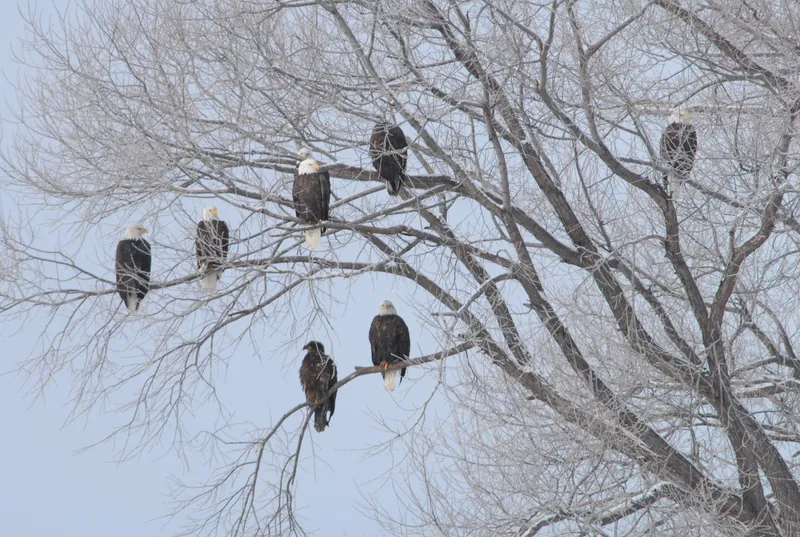
Bald eagles in a frosty tree at Lower Klamath
Bald eagles in a frosty tree at Lower KlamathPhoto: Dave Menke/USFWS · Public domain · source

Bald eagle

  • An adult bald eagle has a white head and tail, and its wings can stretch six-and-a-half to eight feet from tip to tip.Source: ODFW · myodfw.com
  • About 500 bald eagles spend the winter at Lower Klamath National Wildlife Refuge.Source: USFWS · fws.gov

Where in the Basin: In winter, look at Tule Lake and Lower Klamath refuges. When Tule Lake freezes, dozens of eagles gather near open water on the Auto Tour.Source: USFWS · fws.gov

When to see it: Best in winter (December to February), when it is very common. Also seen in spring, summer and fall. It nests in the Klamath Basin.Source: USFWS checklist · govinfo.gov

Discovery places: Lower Klamath and Tule Lake, Upper Klamath Lake
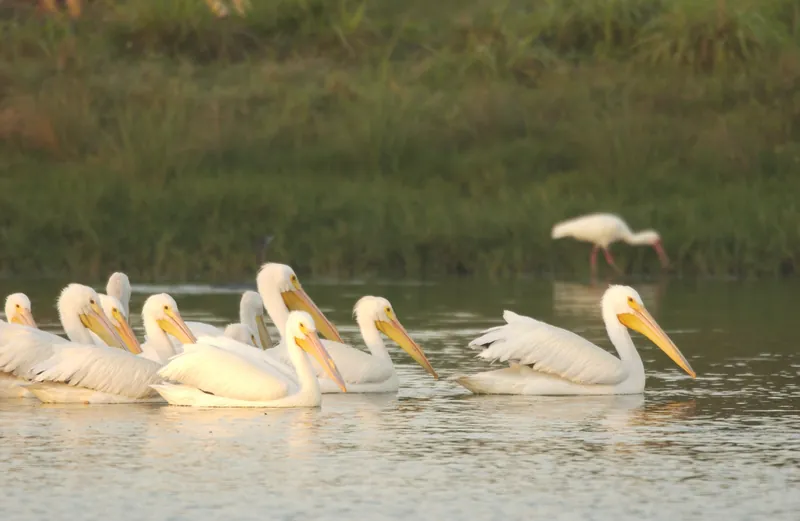
American white pelicans swimming together
American white pelicans swimming togetherPhoto: Hagerty, Ryan/USFWS · Public domain · source

American white pelican

  • The American white pelican has the longest wingspan of any bird in Oregon, and a huge orange bill.Source: ODFW · myodfw.com
  • White pelicans nest at Lower Klamath and Upper Klamath National Wildlife Refuges, and are common in Klamath County from March through October.Source: ODFW · myodfw.com

Where in the Basin: Upper Klamath Refuge's marshes are nesting areas for American white pelicans.Source: USFWS · fws.gov

When to see it: Best in spring, summer and fall (March to May; June to August; September to November), when it is common. Also seen in winter. It nests in the Klamath Basin.Source: USFWS checklist · govinfo.gov

Discovery places: Lower Klamath and Tule Lake, Upper Klamath Lake
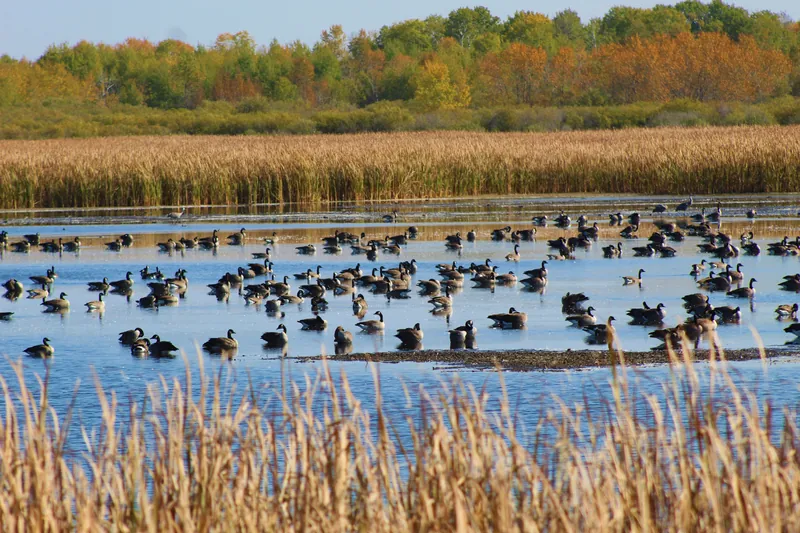
A flock of Canada geese on a marsh pond
A flock of Canada geese on a marsh pondPhoto: Lynda Knutsen/USFWS · Public domain · source

Canada goose

  • Canada geese have a black neck and head with white cheek patches. There are 11 different kinds (subspecies) of Canada goose.Source: ODFW · myodfw.com
  • At the Klamath Wildlife Area near Klamath Falls, Canada geese rest in wetlands or eat in farm fields and pastures.Source: ODFW · myodfw.com

Where in the Basin: On the Lower Klamath refuge Auto Tour, large flocks of geese and ducks stop in spring and fall.Source: USFWS · fws.gov

When to see it: Best in spring and fall (March to May; September to November), when it is very common. Also seen in summer and winter. It nests in the Klamath Basin.Source: USFWS checklist · govinfo.gov

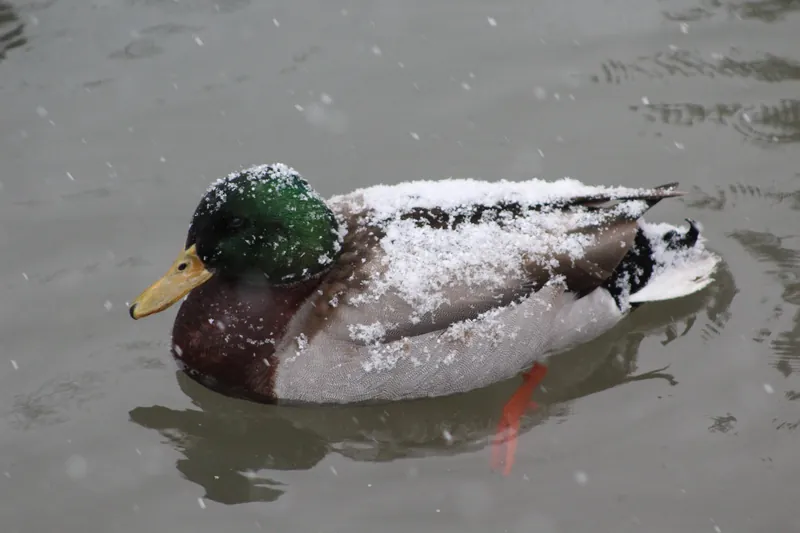
A mallard drake swimming in winter
A mallard drake swimming in winterPhoto: April Gregory/USFWS · Public domain · source

Mallard

  • The mallard is the most plentiful and widespread waterfowl (ducks, geese and swans) in the whole Northern Hemisphere.Source: ODFW · myodfw.com
  • When mallards molt, they lose their flight feathers and can't fly for a while. Scientists studied flightless mallard moms on Klamath Basin refuges.Source: USGS · usgs.gov

Where in the Basin: On the Lower Klamath refuge Auto Tour, look for large flocks of ducks in spring and fall.Source: USFWS · fws.gov

When to see it: Best in spring and fall (March to May; September to November), when it is very common. Also seen in summer and winter. It nests in the Klamath Basin.Source: USFWS checklist · govinfo.gov

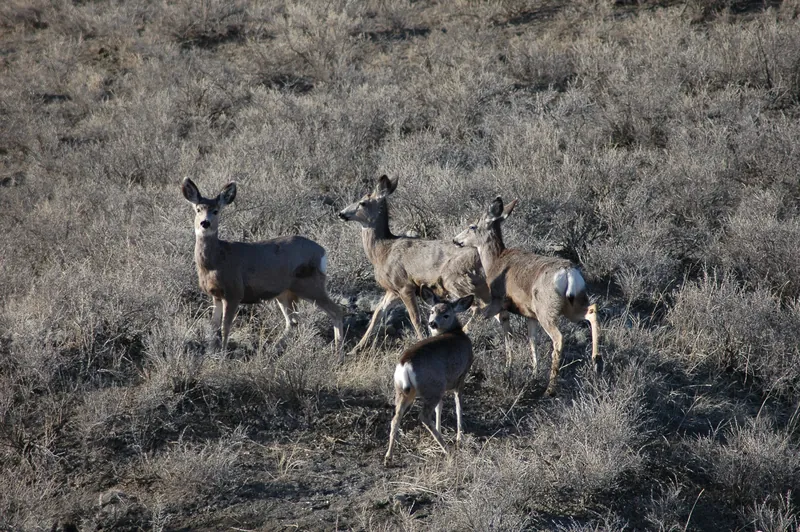
Mule deer in sagebrush
Mule deer in sagebrushPhoto: Billings, Brett/USFWS · Public domain · source

Mule deer

  • Mule deer have long ears and a white rump patch around a white tail with a black tip.Source: ODFW · myodfw.com
  • Mule deer live all over Oregon east of the Cascade Range. Many spend summer up high, then move lower down for winter.Source: ODFW · myodfw.com

Where in the Basin: At Lava Beds National Monument mule deer are common all year. In winter they gather in herds along Hill Road at the north end of the park.Source: NPS · nps.gov

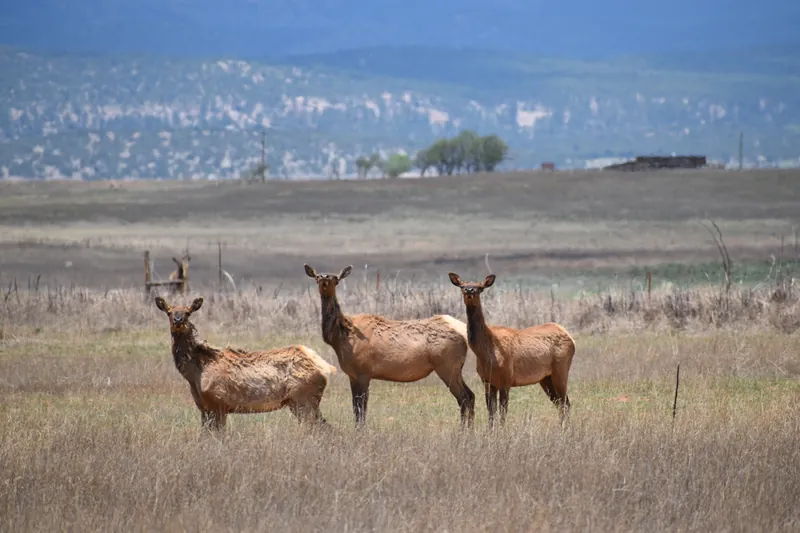
Three elk in a grassy field
Three elk in a grassy fieldPhoto: Kayla Feist/USFWS · Public domain · source

Elk

  • The elk is the biggest member of the deer family in Oregon.Source: ODFW · myodfw.com
  • Oregon has two kinds of elk: Rocky Mountain elk live east of the Cascade Range, and Roosevelt elk live west of it.Source: ODFW · myodfw.com

Where in the Basin: Elk are among the biggest animals living in Crater Lake National Park, but big animals are not often seen near Rim Drive.Source: NPS · nps.gov

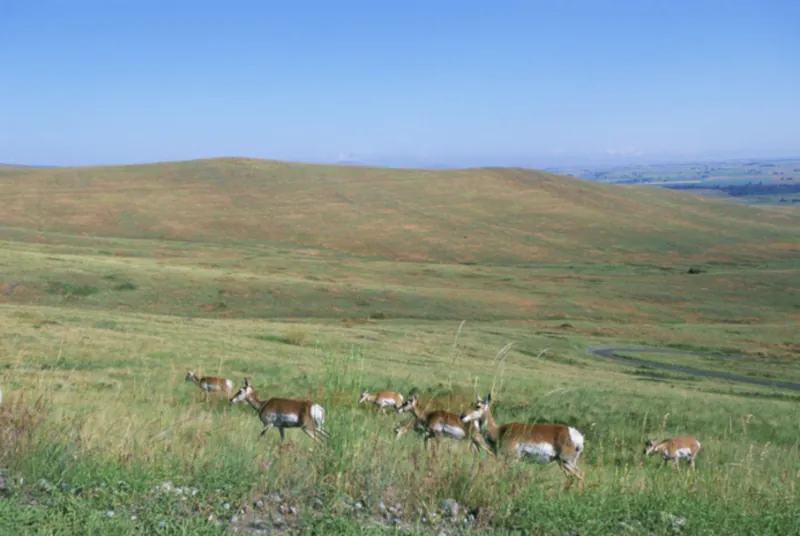
Pronghorn walking through grassland
Pronghorn walking through grasslandPhoto: Hagerty, Ryan/USFWS · Public domain · source

Pronghorn

  • Pronghorn stay safe with amazing eyesight and great speed. They notice anything new or moving nearby.Source: ODFW · myodfw.com
  • Pronghorn live in much of eastern Oregon, in sagebrush country. In winter, herds can have 50 or more animals.Source: ODFW · myodfw.com

Where in the Basin: The sagebrush and bunchgrass uplands around Clear Lake National Wildlife Refuge are pronghorn country. The refuge itself is closed to visitors to protect the wildlife.Source: USFWS · fws.gov

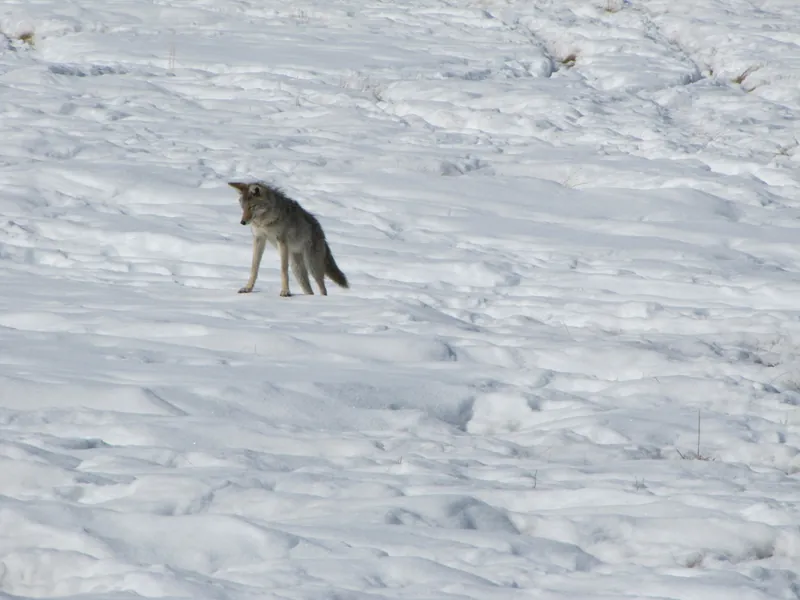
A coyote in the snow
A coyote in the snowPhoto: Iverson, Lori/USFWS · Public domain · source

Coyote

  • A coyote is bigger than a fox but smaller than a gray wolf.Source: ODFW · myodfw.com
  • Coyotes live almost everywhere in Oregon, from grasslands and sagebrush to forests and even cities.Source: ODFW · myodfw.com

Where in the Basin: Coyotes are among the small hunters common around Rim Drive at Crater Lake National Park.Source: NPS · nps.gov

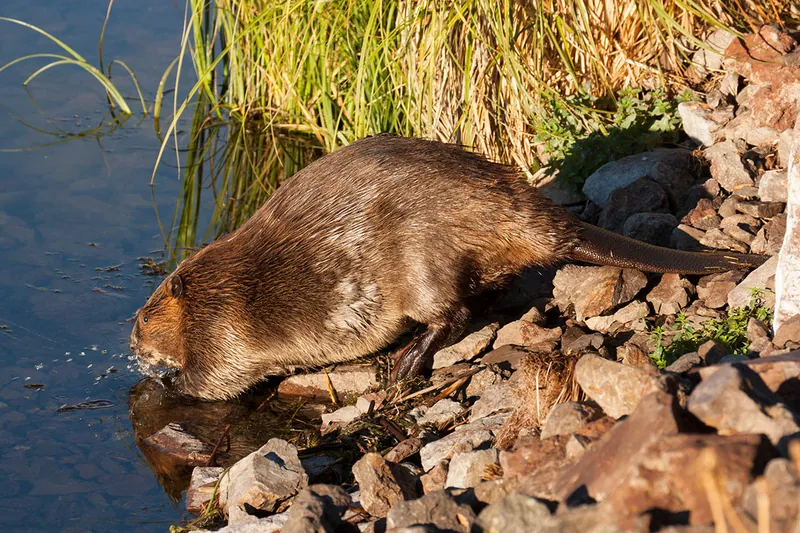
A beaver at the water's edge
A beaver at the water's edgePhoto: James "Newt" Perdue/USFWS volunteer · Public domain · source

American beaver

  • The American beaver is the largest rodent in North America and often weighs over 55 pounds.Source: ODFW · myodfw.com
  • Beavers can close their ears and nose when they dive. They do not hibernate; in winter they stay busy under the ice.Source: ODFW · myodfw.com

Where in the Basin: Look along slow streams and wetlands lined with willow, aspen and cottonwood trees, in the evening: beavers are most active then and at night.Source: ODFW · myodfw.com

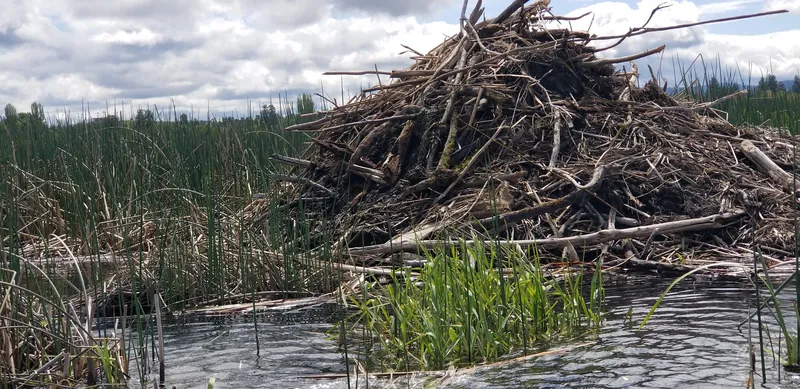
beaver lodge
Beaver lodgePhoto: Troy Miller
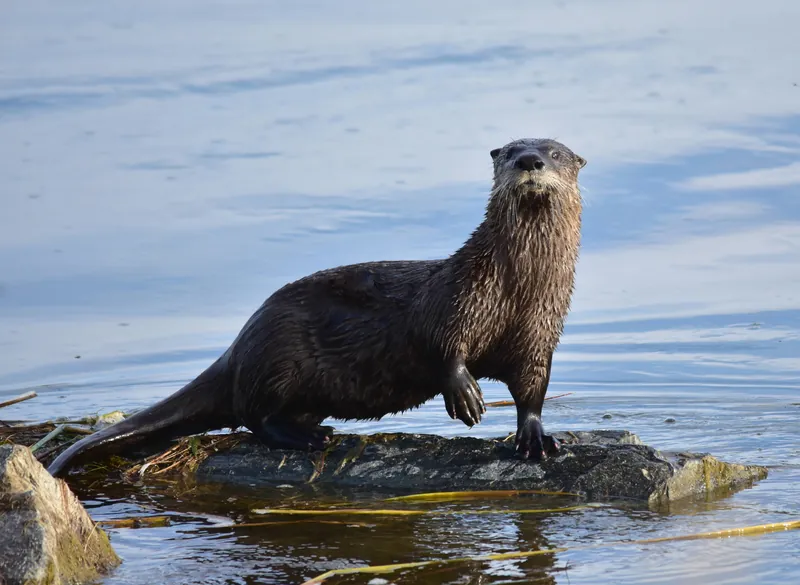
A river otter on a rock by the water
A river otter on a rock by the waterPhoto: Tom Koerner/USFWS · Public domain · source

North American river otter

  • River otters have webbed toes, short strong legs, and a thick tail, so they are great swimmers.Source: ODFW · myodfw.com
  • In Oregon, most river otters live west of the Cascades, but they have also been found in eastern Klamath County.Source: ODFW · myodfw.com

Where in the Basin: Northern river otters are one of the animals you may see at the Klamath Wildlife Area, south of Klamath Falls.Source: ODFW · myodfw.com

Discovery places: Link River, Wood River Wetland

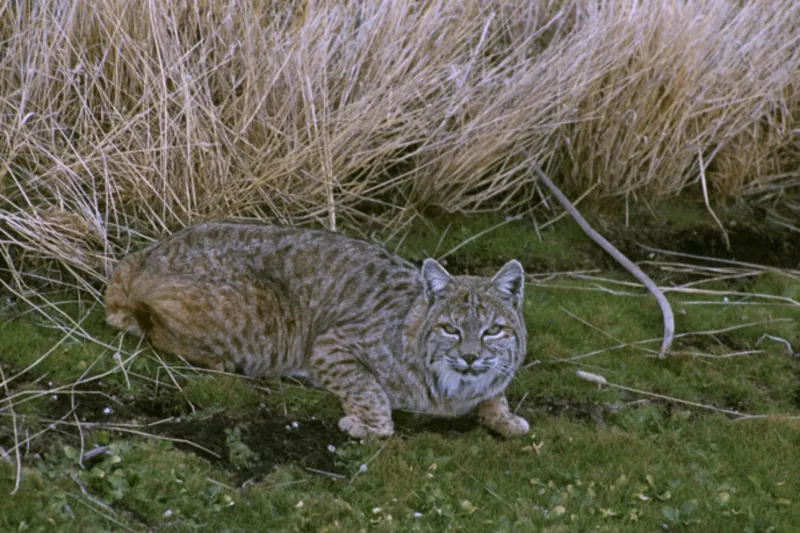
A bobcat crouched in the grass
A bobcat crouched in the grassPhoto: Menke, Dave/USFWS · Public domain · source

Bobcat

  • A bobcat is about twice the size of a house cat, with a short tail and little black tufts on its ears. Bobcats live all over Oregon.Source: ODFW · myodfw.com
  • At Crater Lake National Park in Oregon, bobcats are among the small hunters seen around Rim Drive.Source: NPS · nps.gov

Where in the Basin: At Lava Beds National Monument the bobcat is the most common wild cat. A mother and her young are often seen at night on the park roads.Source: NPS · nps.gov

Discovery places: Crater Lake

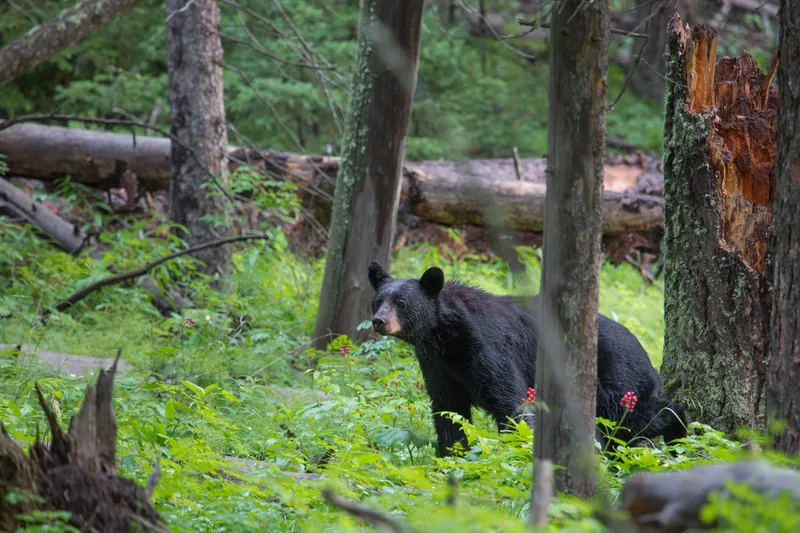
A black bear in the forest
A black bear in the forestPhoto: NPS · Public domain · source

American black bear

  • Black bears are the largest carnivores living in Oregon today, but they are smaller than grizzly bears.Source: ODFW · myodfw.com
  • Crater Lake National Park has 41 known black bears. They usually stay in their dens from November to May.Source: NPS · nps.gov

Where in the Basin: Black bears live in the forests of Crater Lake National Park, but seeing one is not likely.Source: NPS · nps.gov

Discovery places: Crater Lake

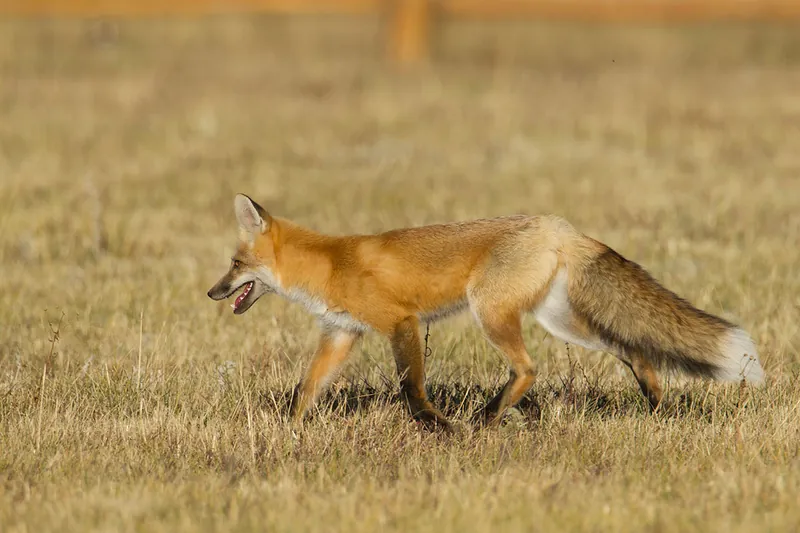
A red fox walking across dry grass
A red fox walking across dry grassPhoto: James "Newt" Perdue /USFWS · Public domain · source

Red fox

  • The red fox has an orange-red coat, black feet and black-tipped ears. A red fox pair mates for life.Source: ODFW · myodfw.com
  • A red fox eats whatever it can find: small animals, birds and their eggs, reptiles, frogs, fruit and some insects.Source: ODFW · myodfw.com

Where in the Basin: Red foxes are among the small hunters common around Rim Drive at Crater Lake National Park.Source: NPS · nps.gov

Discovery places: Crater Lake

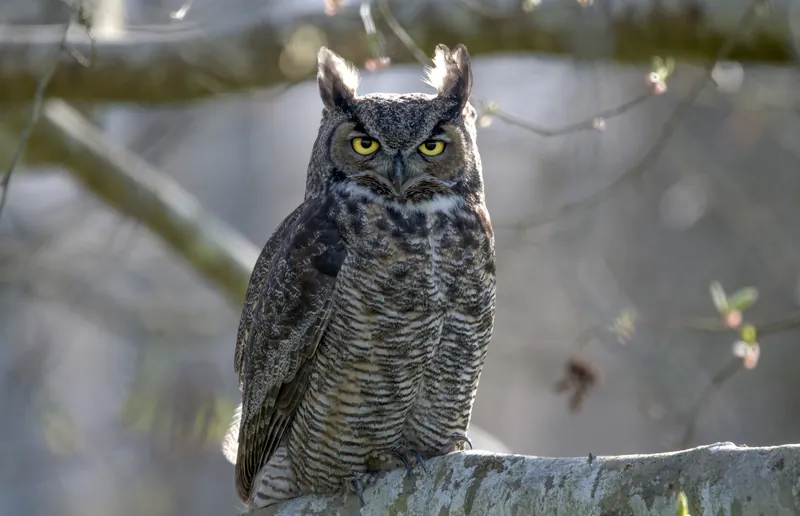
A great horned owl on a branch
A great horned owl on a branchPhoto: Jake Bonello/USFWS · Public domain · source

Great horned owl

  • The great horned owl is the owl people see most often in Oregon. It lives here all year.Source: ODFW · myodfw.com
  • Great horned owls have big yellow eyes and feather tufts above their eyes that look like ears.Source: ODFW · myodfw.com

Where in the Basin: Great horned owls nest in trees, on buildings, in other birds' old nests and in cliff cracks. At Lava Beds National Monument they are often seen raising their young.Source: NPS · nps.gov

When to see it: All year: common in every season. It nests in the Klamath Basin.Source: USFWS checklist · govinfo.gov

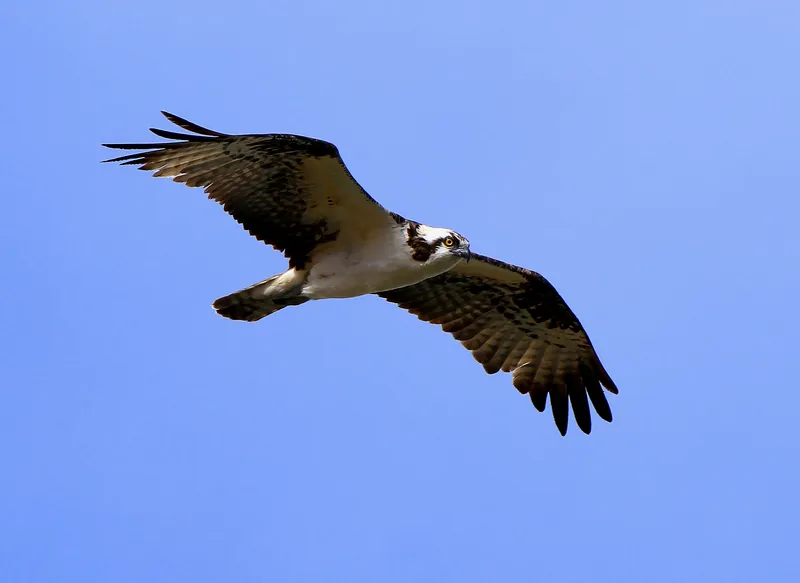
An osprey in flight
An osprey in flightPhoto: Magera, John/USFWS · Public domain · source

Osprey

  • The osprey is a big fish-eating bird of prey. In 2017, Oregon made the osprey its official State Raptor.Source: ODFW · myodfw.com
  • Ospreys build big stick nests near water, and can live up to 25 years in the wild.Source: ODFW · myodfw.com

Where in the Basin: Ospreys nest near Upper Klamath Refuge and can sometimes be seen fishing in refuge waters.Source: USFWS · fws.gov

When to see it: Best in spring, summer and fall (March to May; June to August; September to November), when it is uncommon. Not on the list in winter. It nests in the Klamath Basin.Source: USFWS checklist · govinfo.gov

Discovery places: Upper Klamath Lake
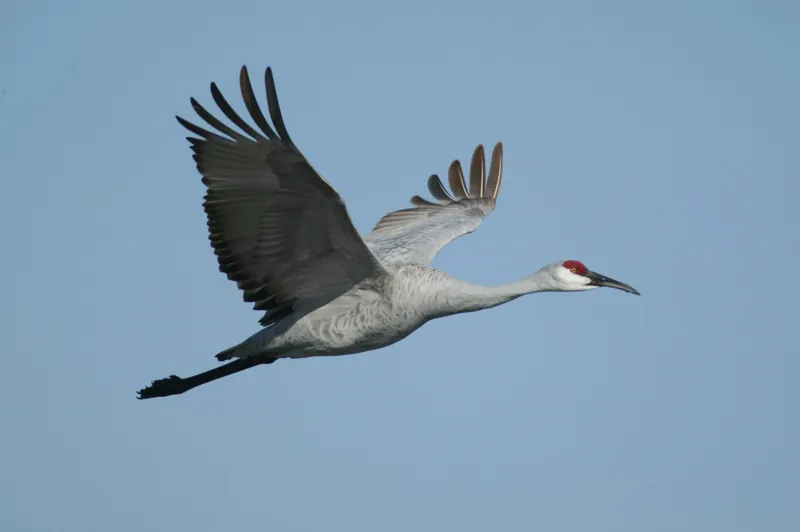
A sandhill crane in flight
A sandhill crane in flightPhoto: Emmons, Steven R. / USFWS · Public domain · source

Sandhill crane

  • The greater sandhill crane is Oregon's tallest bird. Adults have a red crown and white cheeks.Source: ODFW · myodfw.com
  • Sandhill cranes nest at Klamath Marsh National Wildlife Refuge, one of the biggest crane nesting spots in Oregon.Source: ODFW · myodfw.com

Where in the Basin: Klamath Marsh National Wildlife Refuge's wet meadows are nesting and feeding places for sandhill cranes.Source: USFWS · fws.gov

When to see it: Best in spring, summer and fall (March to May; June to August; September to November), when it is uncommon. Also seen in winter. It nests in the Klamath Basin.Source: USFWS checklist · govinfo.gov

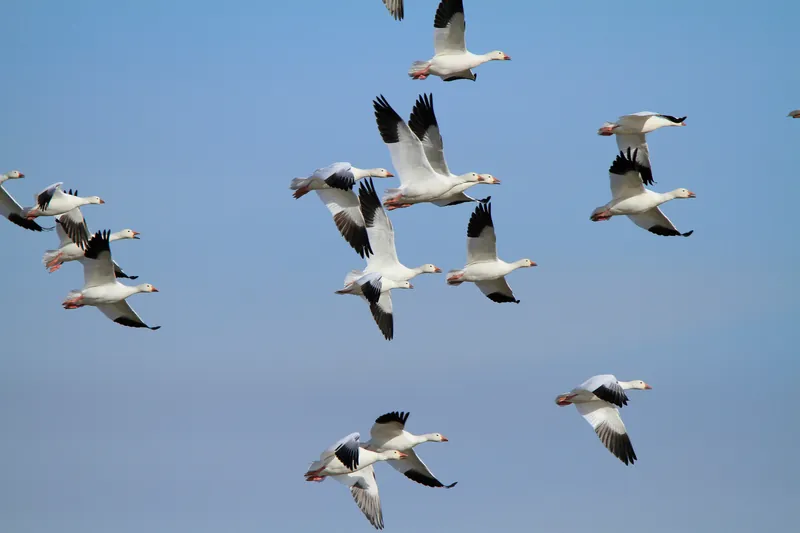
Snow geese flying
Snow geese flyingPhoto: Magera, John/USFWS · Public domain · source

Snow goose

  • Snow geese and Ross's geese are Oregon's only wild white geese. Both have black wing tips.Source: ODFW · myodfw.com
  • Snow geese fly between their nests in the Arctic and wintering places farther south. They stop at Lower Klamath refuge in spring and fall.Source: ODFW · myodfw.com

Where in the Basin: Lower Klamath National Wildlife Refuge and the Klamath Wildlife Area, mostly during spring and fall migration.Source: ODFW · myodfw.com

When to see it: Best in spring and fall (March to May; September to November), when it is very common. Also seen in summer and winter.Source: USFWS checklist · govinfo.gov

Discovery places: Lower Klamath and Tule Lake

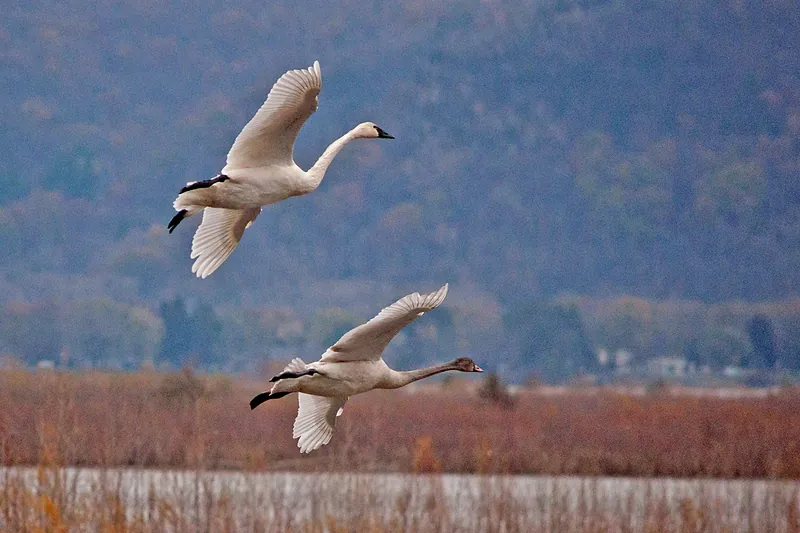
A tundra swan coming in to land
A tundra swan coming in to landPhoto: USFWS · Public domain · source

Tundra swan

  • Outside nesting season, the tundra swan is by far Oregon's most common swan. It looks like a trumpeter swan but sounds different.Source: ODFW · myodfw.com
  • About 30,000 tundra swans spend the winter at Lower Klamath National Wildlife Refuge.Source: USFWS · fws.gov

Where in the Basin: Lower Klamath National Wildlife Refuge in winter.Source: USFWS · fws.gov

When to see it: Best in winter (December to February), when it is very common. Also seen in spring, summer and fall.Source: USFWS checklist · govinfo.gov

Discovery places: Lower Klamath and Tule Lake

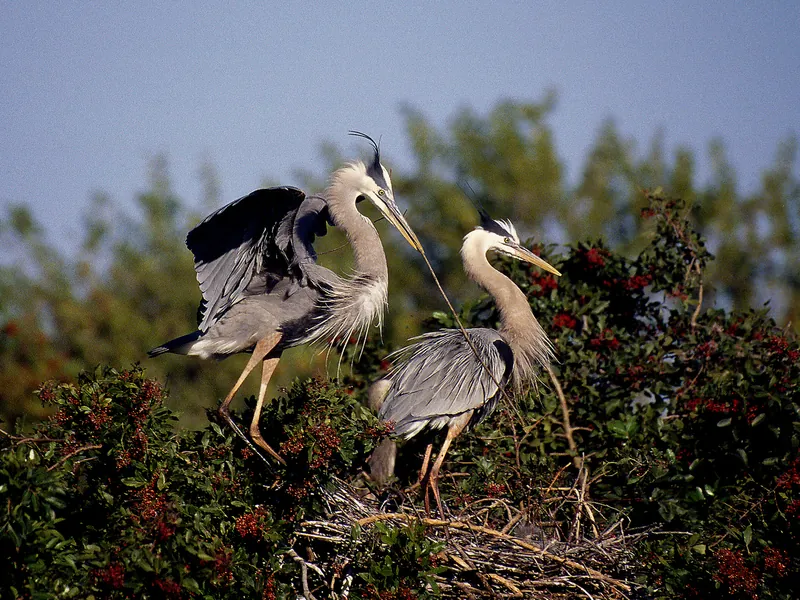
Two great blue herons at their nest
Two great blue herons at their nestPhoto: Karney, Lee/USFWS · Public domain · source

Great blue heron

  • The great blue heron is the largest heron in North America and stands about four feet tall.Source: ODFW · myodfw.com
  • Great blue herons catch fish and frogs in shallow water. In winter they also hunt mice and other rodents in fields.Source: ODFW · myodfw.com

Where in the Basin: The marshes of Upper Klamath National Wildlife Refuge are nesting places for several kinds of herons.Source: USFWS · fws.gov

When to see it: All year: common in every season. It nests in the Klamath Basin.Source: USFWS checklist · govinfo.gov

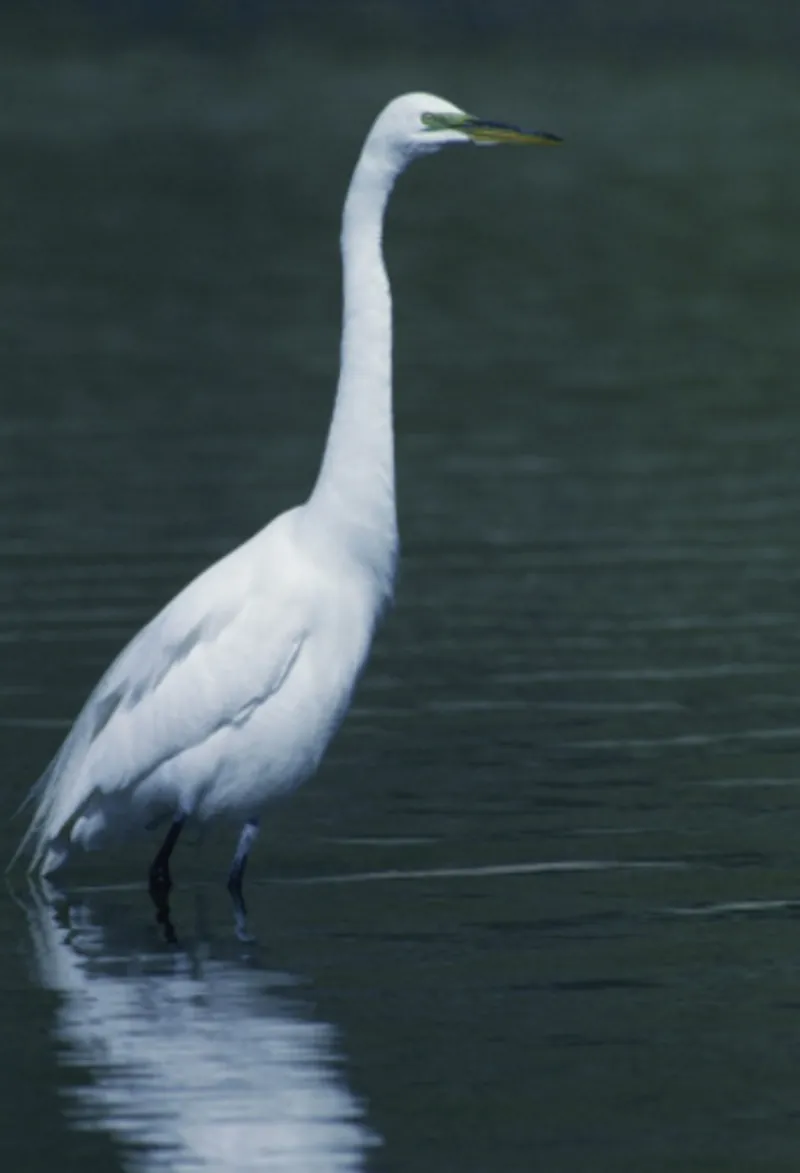
A great egret standing in calm water
A great egret standing in calm waterPhoto: Menke, Dave/USFWS · Public domain · source

Great egret

  • The great egret is a big white bird with a yellow bill and black legs.Source: ODFW · myodfw.com
  • Great egrets live in the Klamath Basin all year, but there are more of them from April through November.Source: ODFW · myodfw.com

Where in the Basin: Great egrets are one of the birds you may see at the Klamath Wildlife Area.Source: ODFW · myodfw.com

When to see it: Best in spring, summer and fall (March to May; June to August; September to November), when it is common. Also seen in winter. It nests in the Klamath Basin.Source: USFWS checklist · govinfo.gov

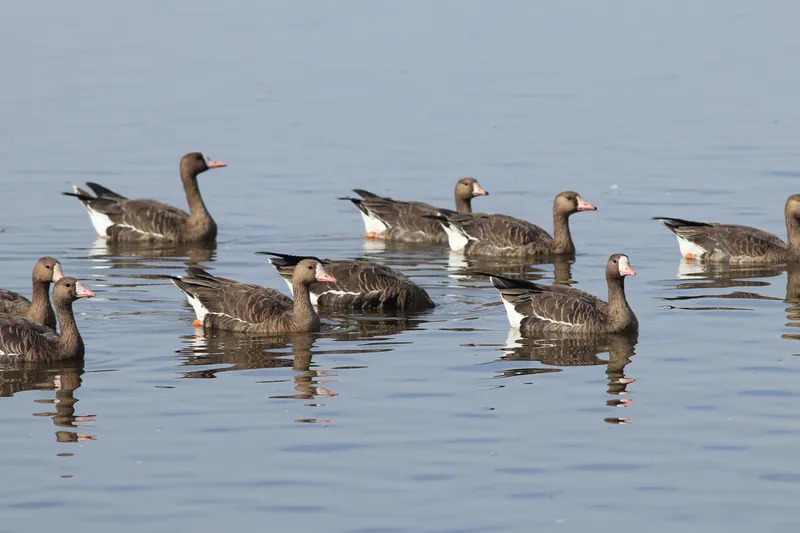
A flock of greater white-fronted geese on the water
A flock of greater white-fronted geese on the waterPhoto: Andrea Mott, USGS Western Ecological Research Center · Public domain · source

Greater white-fronted goose

  • The greater white-fronted goose is gray-brown with orange feet. Grown-ups have a white patch on the forehead, a pinkish-orange bill and black bars on the belly.Source: ODFW · myodfw.com
  • Its laugh-like calls high overhead in August and September are one of the first signs of fall in south central Oregon.Source: ODFW · myodfw.com

Where in the Basin: Greater white-fronted geese are one of the birds you may see at the Klamath Wildlife Area, south of Klamath Falls.Source: ODFW · myodfw.com

When to see it: Best in spring and fall (March to May; September to November), when it is very common. Also seen in summer and winter.Source: USFWS checklist · govinfo.gov

Discovery places: Lower Klamath and Tule Lake

A redband trout (this one is from the Goose Lake Basin, Oregon)
A redband trout (this one is from the Goose Lake Basin, Oregon)Photo: USGS, Oregon Cooperative Fish and Wildlife Research Unit · Public domain · source

Redband trout

  • Redband trout are a native kind of rainbow trout that have adapted to the dry, desert conditions of eastern Oregon.Source: ODFW · myodfw.com
  • Trout need water that is clear, clean and cold.Source: ODFW · myodfw.com
  • Biologists counted record-low numbers of spawning redband trout in the winter of 2025 to 2026, so ODFW made fishing for them in Upper Klamath Lake catch-and-release only from June 15 to October 31 to help them.Source: ODFW · myodfw.com
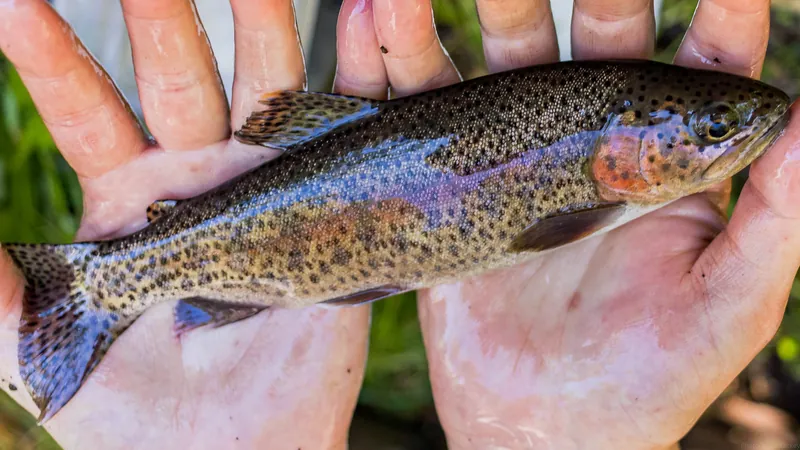
Where in the Basin: Upper Klamath Lake and the cold, spring-fed creeks that flow into it, and the Wood and Williamson rivers.Source: ODFW · myodfw.com
When to see it: They lay their eggs in winter in spring-fed creeks. In late May or early June, when the lake water gets worse, they crowd into cold-water spots.Source: ODFW · myodfw.com

Discovery places: Williamson and Sprague, Wood River headwaters

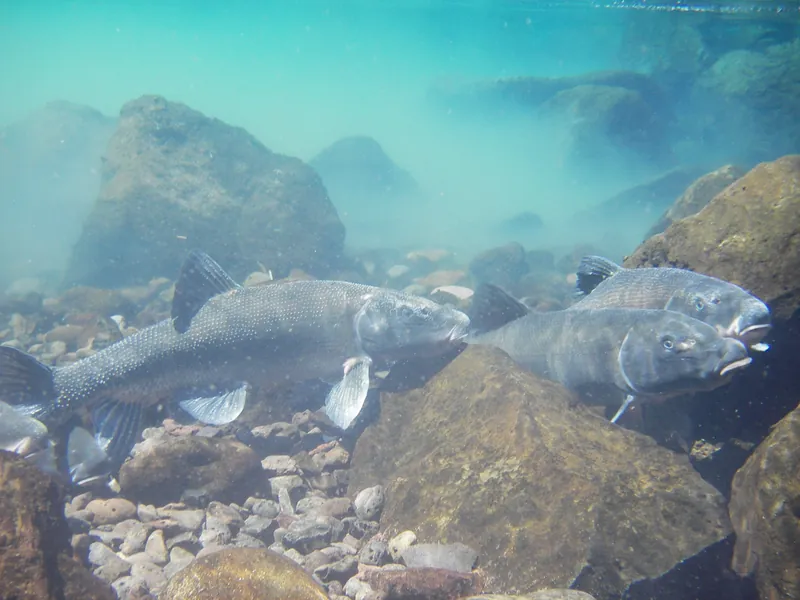
Lost River suckers at a spring in Upper Klamath Lake
Lost River suckers at a spring in Upper Klamath LakePhoto: USGS · Public domain · source

Lost River sucker (endangered)

  • The Lost River sucker is a big fish found only in the upper Klamath River basin in Oregon and the Lost River basin in California. Some have lived more than 40 years.Source: USGS · usgs.gov
  • It is an endangered species. The U.S. Fish and Wildlife Service listed it as endangered in 1988.Source: USFWS · fws.gov
  • Scientists keep track of these fish with tiny tags that work like a highway toll pass: an antenna reads the tag when a fish swims by.Source: USGS · usgs.gov

Where in the Basin: Upper Klamath Lake. In spring they swim a short way up the lower Williamson and Sprague rivers, or gather at springs along the lake's eastern shore, to lay their eggs.Source: USGS · usgs.gov

When to see it: Spring: most of their egg-laying happens in March and April.Source: USGS · usgs.gov

Discovery places: Upper Klamath Lake
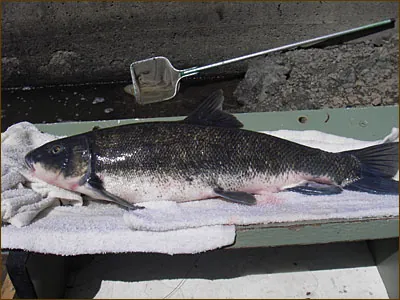
An adult shortnose sucker
An adult shortnose suckerPhoto: USGS, Western Fisheries Research Center · Public domain · source

Shortnose sucker (endangered)

  • The shortnose sucker is a fish of the upper Klamath Basin with a dark greenish-brown back and a silvery to creamy-white belly. Grown-ups are usually about 16 inches long.Source: USFWS · fws.gov
  • It is an endangered species, listed in 1988. To help it, a U.S. Fish and Wildlife Service program has raised young suckers since 2015, and the first ones were let go in 2018.Source: USFWS · fws.gov
  • It eats by suction, slurping up tiny animals, algae, insects and bits of old plants from the lake bottom.Source: USFWS · fws.gov

Where in the Basin: Upper Klamath Lake and Lake Ewauna in southern Oregon; Gerber Reservoir and the Klamath Basin refuges in northern California.Source: USFWS · fws.gov
When to see it: Spring: grown-ups swim from the lakes into rivers from March through May to lay their eggs.Source: USFWS · fws.gov

Discovery places: Upper Klamath Lake
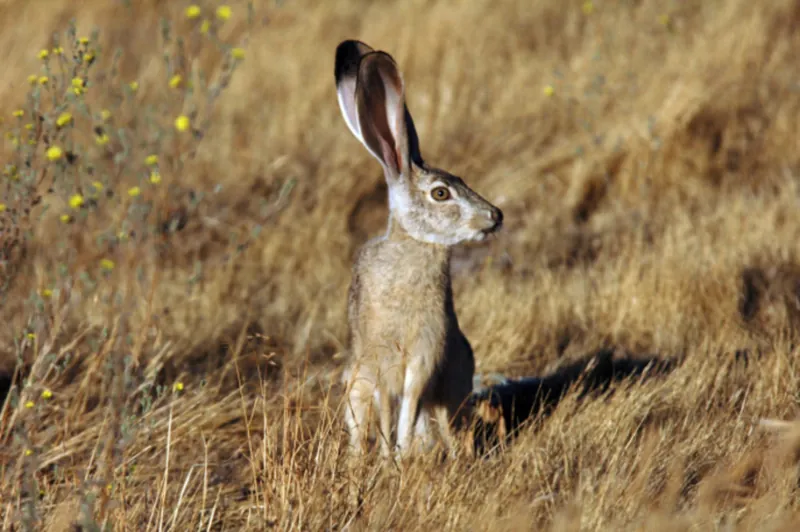
A black-tailed jackrabbit, ears up
A black-tailed jackrabbit, ears upPhoto: Scott Rheam/USFWS · Public domain · source

Black-tailed jackrabbit

  • A jackrabbit is really a hare, not a true rabbit: it is bigger, with longer legs and huge ears.Source: NPS · nps.gov
  • Its big ears work like an elephant's: blood flowing through them lets body heat escape, which keeps it cool on hot days.Source: NPS · nps.gov

Where in the Basin: East of the Cascade Range, black-tailed jackrabbits live throughout Oregon's sagebrush country.Source: ODFW · myodfw.com

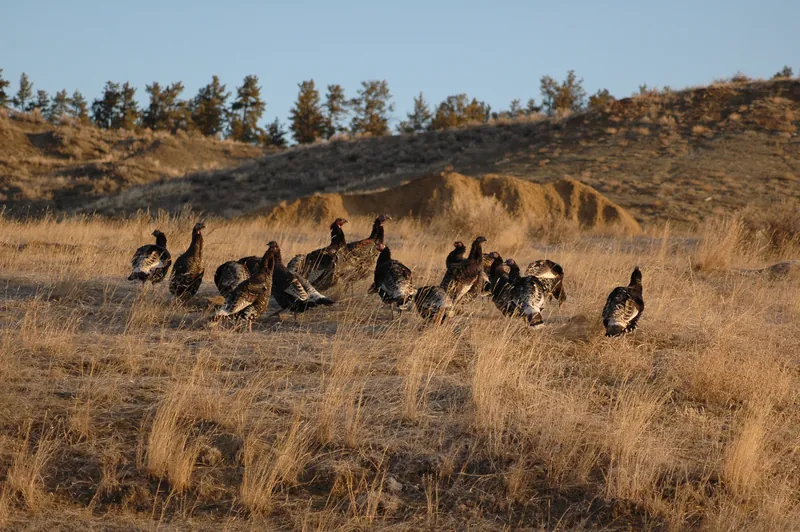
A flock of wild turkeys in dry grass
A flock of wild turkeys in dry grassPhoto: Billings, Brett/USFWS · Public domain · source

Wild turkey

  • The wild turkey is the largest game bird in North America. Grown males can weigh more than 20 pounds and stand 40 inches tall.Source: ODFW · myodfw.com
  • In bright sunlight, a turkey's dark feathers shine gold, copper and green, so they look like metal.Source: ODFW · myodfw.com

Where in the Basin: Wild turkeys like forests mixed with open places in low and middle mountains.Source: ODFW · myodfw.com

When to see it: All year: uncommon in every season.Source: USFWS checklist · govinfo.gov

Farm and ranch

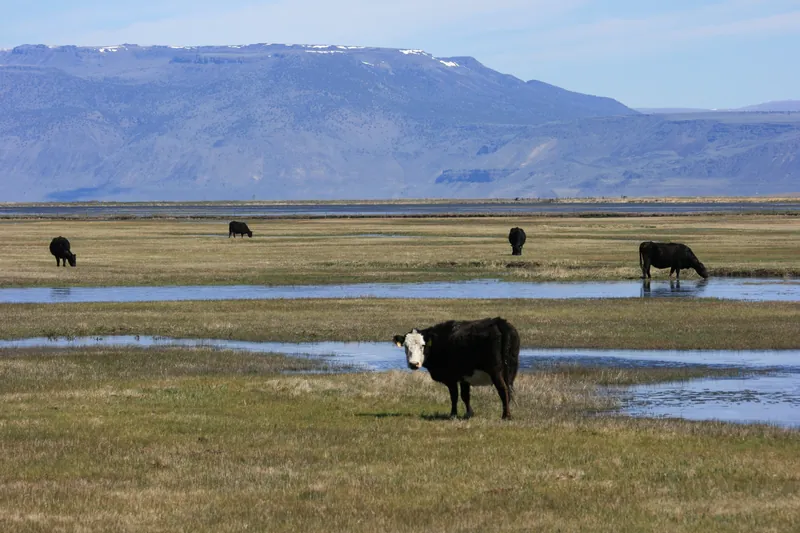
Cattle grazing in the Warner Valley, Oregon
Cattle grazing in the Warner Valley, OregonPhoto: Garth Herring, U.S. Geological Survey, Forest and Rangeland Ecosystem Science Center · Public domain · source

Beef cattle (ranch animal)

  • Beef cattle are raised on ranches for meat. Cattle and calves were Oregon's second most valuable farm product in 2022, worth about 791 million dollars.Source: Oregon Dept. of Agriculture · content.govdelivery.com
  • Klamath County is one of Oregon's top five counties for raising cattle, with Malheur, Harney, Baker and Lake counties.Source: Oregon Dept. of Agriculture · content.govdelivery.com
  • At the end of 2022, Klamath County had 54,839 cattle and calves.Source: USDA Census of Agriculture · nass.usda.gov
  • Almost 25,000 of them were beef cows, on 309 Klamath County farms.Source: USDA Census of Agriculture · nass.usda.gov
  • Klamath County farms sold about 45 million dollars of cattle and calves in 2022.Source: USDA Census of Agriculture · nass.usda.gov
  • In the early 1900s, Wood River Valley ranchers learned it did not pay to keep cattle there through the snowy winters, so the herds spent winter in California.Source: Jefferson Public Radio, As It Was · ijpr.org

Where in the Basin: The grassy pastures of the Wood River Valley around Fort Klamath, where ranchers bring cattle for summer.Source: Jefferson Public Radio, As It Was · ijpr.org

When to see it: Summer. Every spring the herds come back north, and ranchers still move cattle back and forth today, by truck.Source: Jefferson Public Radio, As It Was · ijpr.org

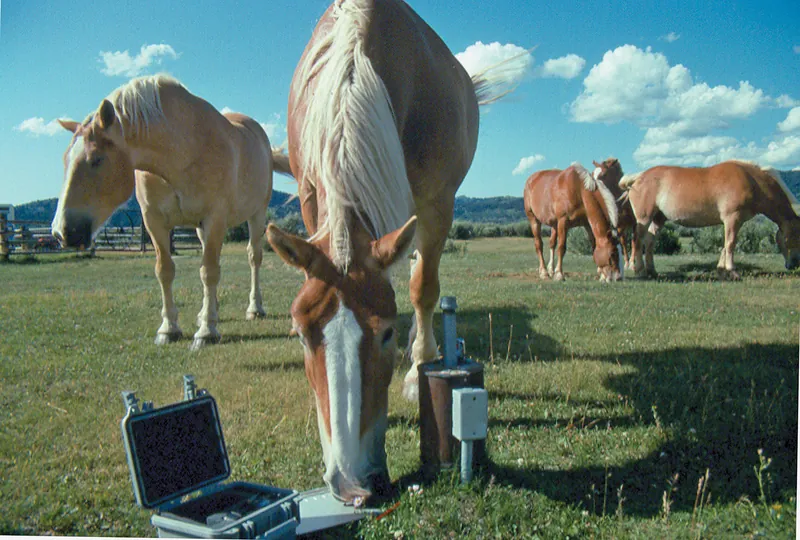
Horses grazing in a pasture beside a water-testing well
Horses grazing in a pasture beside a water-testing wellPhoto: USGS · Public domain · source

Horse (Running Y riding horse)

  • In 2022, Klamath County farms had 1,462 horses and ponies.Source: USDA Census of Agriculture · nass.usda.gov
  • Klamath County farms also had 61 mules, burros and donkeys.Source: USDA Census of Agriculture · nass.usda.gov
  • When Fort Klamath cattle rode the train south for winter, the cowboys loaded their horses on a stock truck and raced to get there first.Source: Jefferson Public Radio, As It Was · ijpr.org

Where in the Basin: On farms and ranches across Klamath County: 272 of them kept horses or ponies in 2022.Source: USDA Census of Agriculture · nass.usda.gov

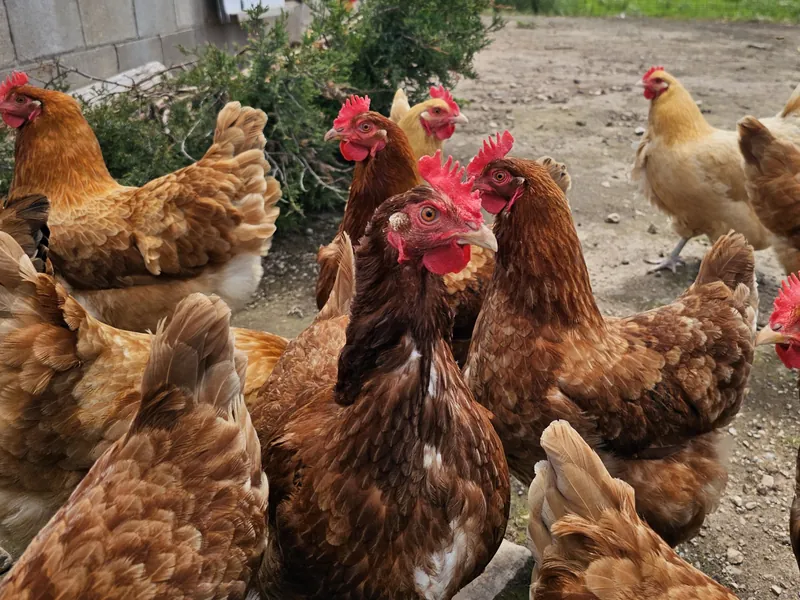
A small flock of laying hens on a farm
A small flock of laying hens on a farmPhoto: USGS · Public domain · source

Chicken (farm animal)

  • In 2022, Klamath County farms had 1,004 egg-laying hens, on 78 farms.Source: USDA Census of Agriculture · nass.usda.gov
  • A young hen, called a pullet, starts laying eggs when she is 18 to 20 weeks old.Source: OSU Extension · extension.oregonstate.edu
  • Eggs are one of Oregon's 20 most valuable farm products.Source: Oregon Dept. of Agriculture · content.govdelivery.com

Where in the Basin: Mostly in small flocks: 77 of the 78 Klamath County farms with laying hens had fewer than 50 in 2022.Source: USDA Census of Agriculture · nass.usda.gov

When to see it: Spring and summer, when the days are long. In Oregon winter, with less daylight, hens grow new feathers and stop laying for a while.Source: OSU Extension · extension.oregonstate.edu

More animals are coming as real photos are found and checked. Animal photos are U.S. public domain (U.S. Fish and Wildlife Service and other federal agencies), credited under each one.