On Friday, November 6, I had the honor of spending the day as a team mentor at Oregon Tech's fifth annual Ready, Set, Innovate! I walked in at 8 a.m. expecting to help some students with a school project. I walked out at the end of the day inspired, and a little more hopeful about the future of Klamath Falls.
A question the whole town has been asking
Ready, Set, Innovate! is a day-long innovation clinic where high school and college students use design thinking, a creative, team-based approach to problem solving, to work on a real challenge chosen with the community. Oregon Tech Business Management professors Hallie Neupert and Kristy Weidman lead it. It started with seed funding from The Lemelson Foundation, and in 2025 the foundation gave Oregon Tech a $25,000 grant to grow the program.
Every year the challenge is something that matters here at home. In 2024 the students worked on opportunities for youth and on attracting and keeping young professionals. Last year they reimagined Lake Ewauna. This year's question was one that people in Klamath Falls have wrestled with for a long time:
How might we reimagine Klamath Falls as a college town rather than a town with a college?
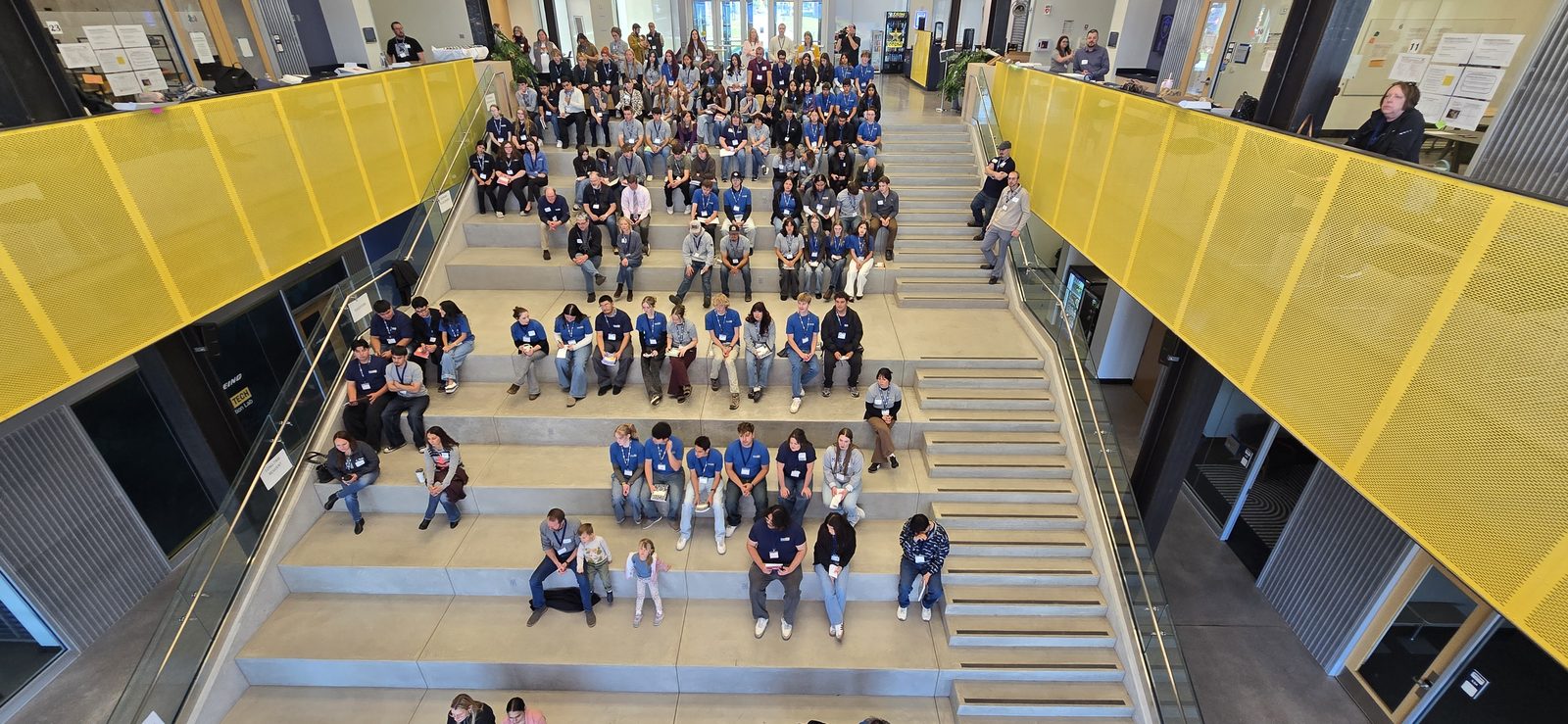
About 140 students took it on, roughly 100 from high schools around the region and 40 from Oregon Tech.
How the day works
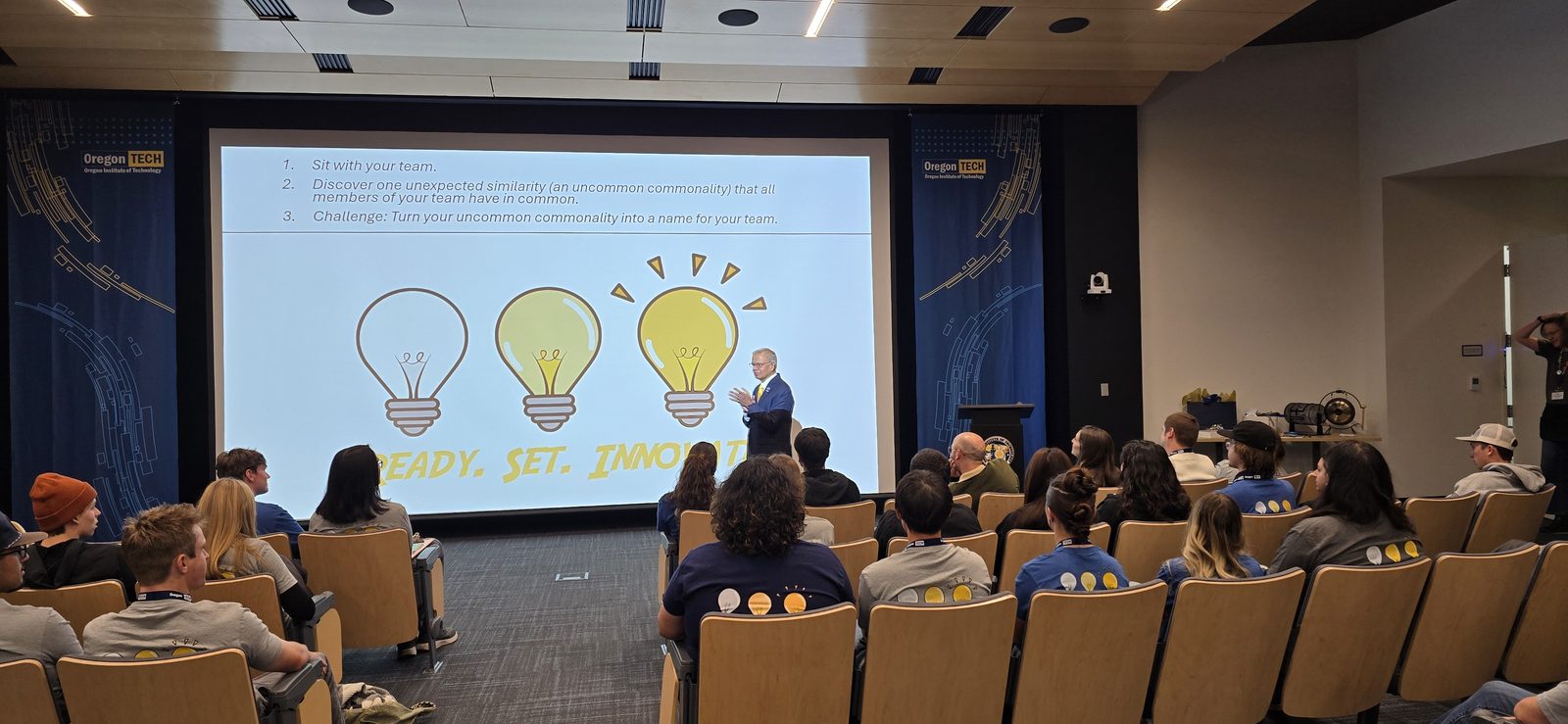
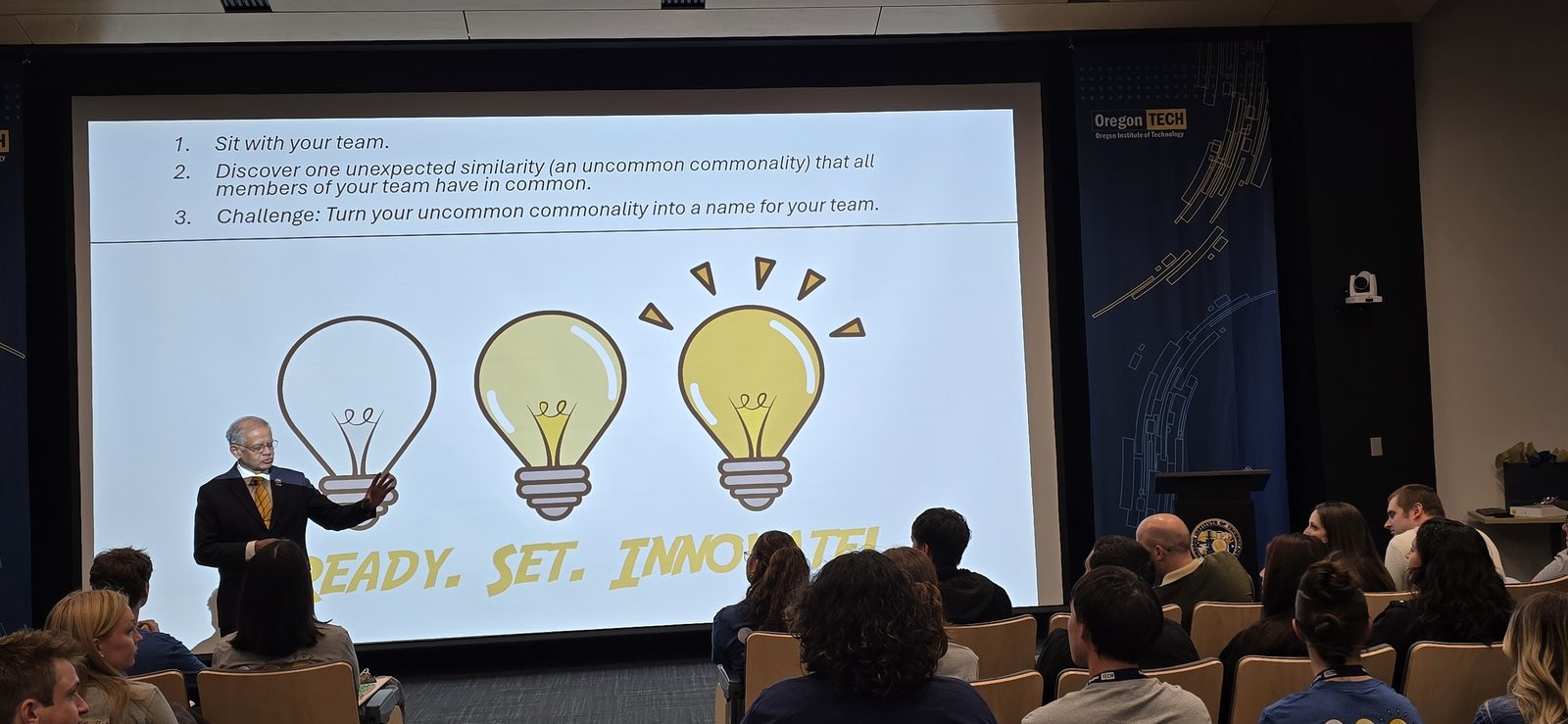
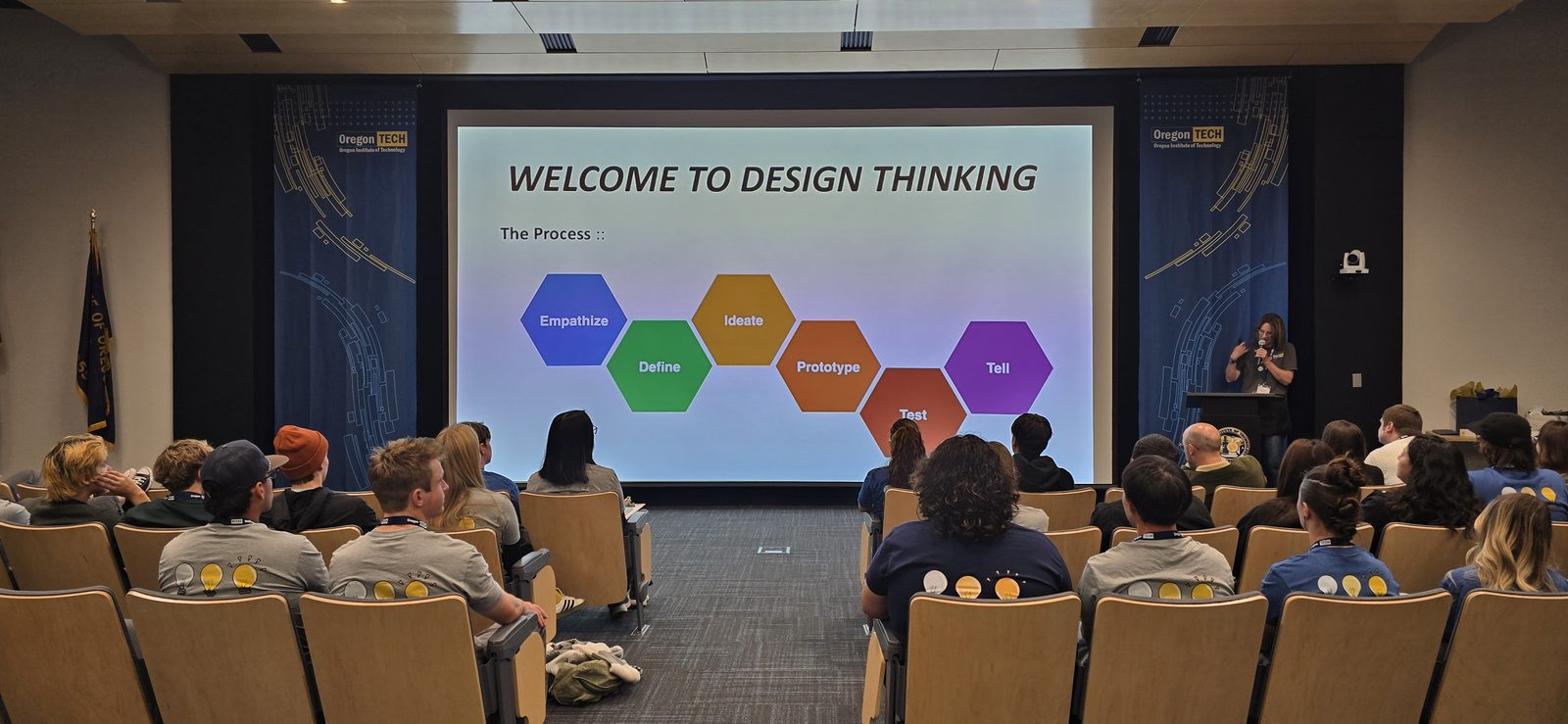
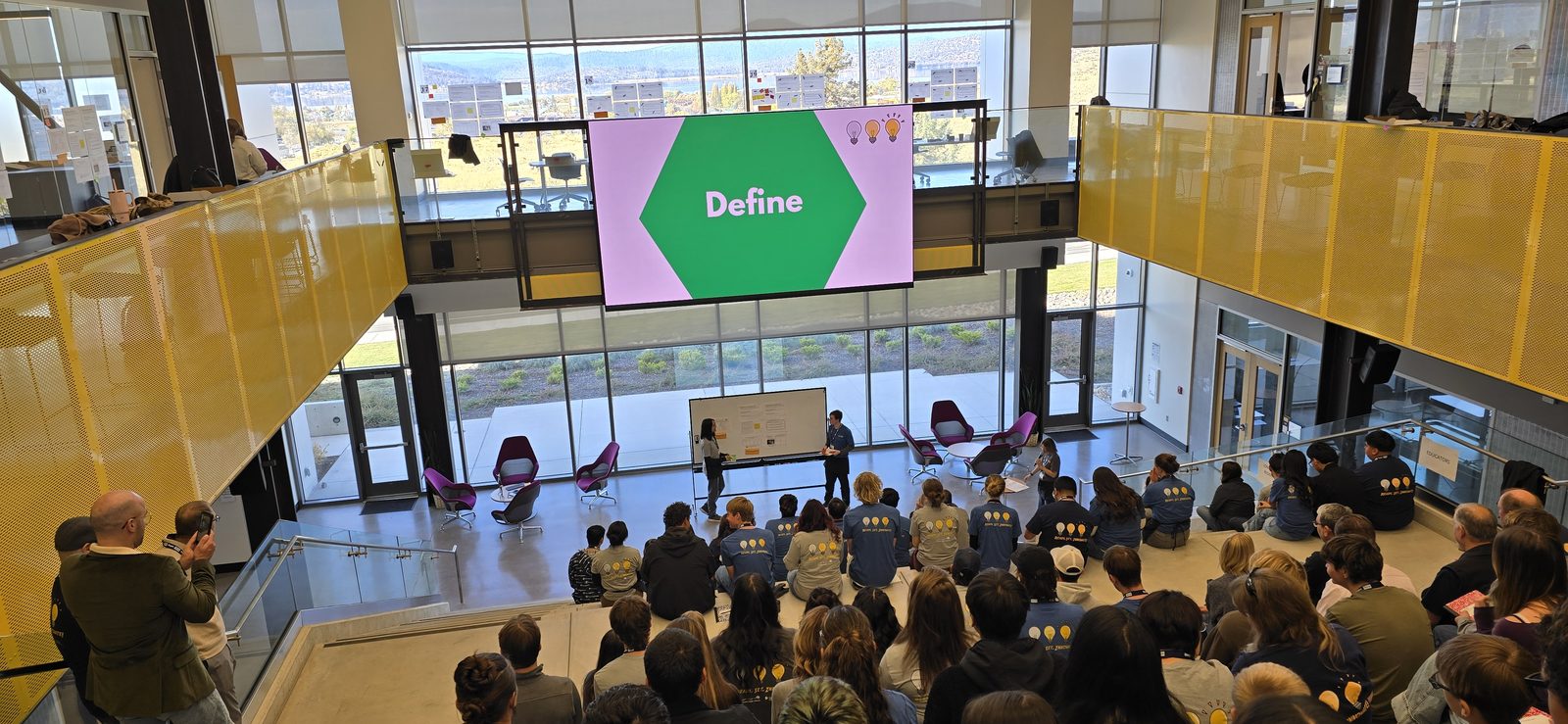
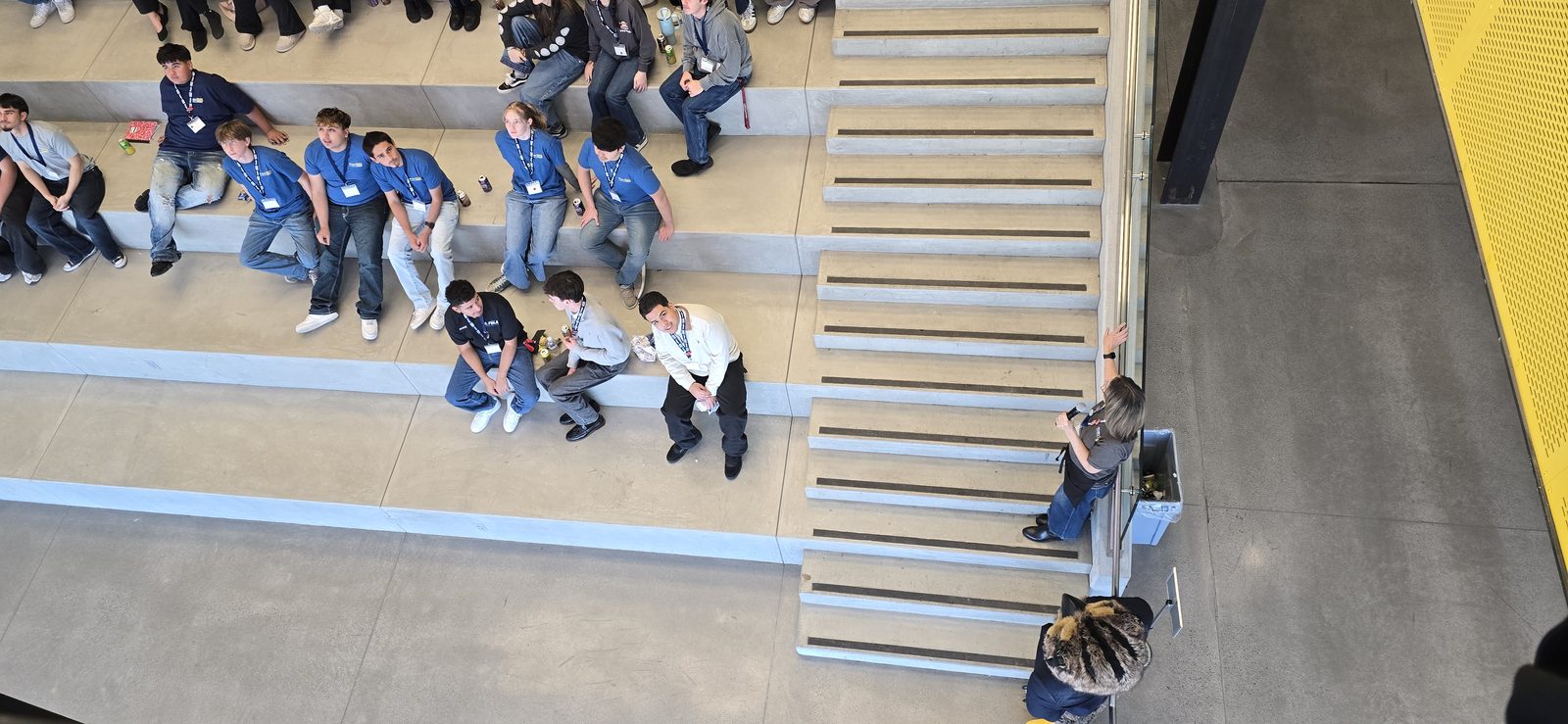
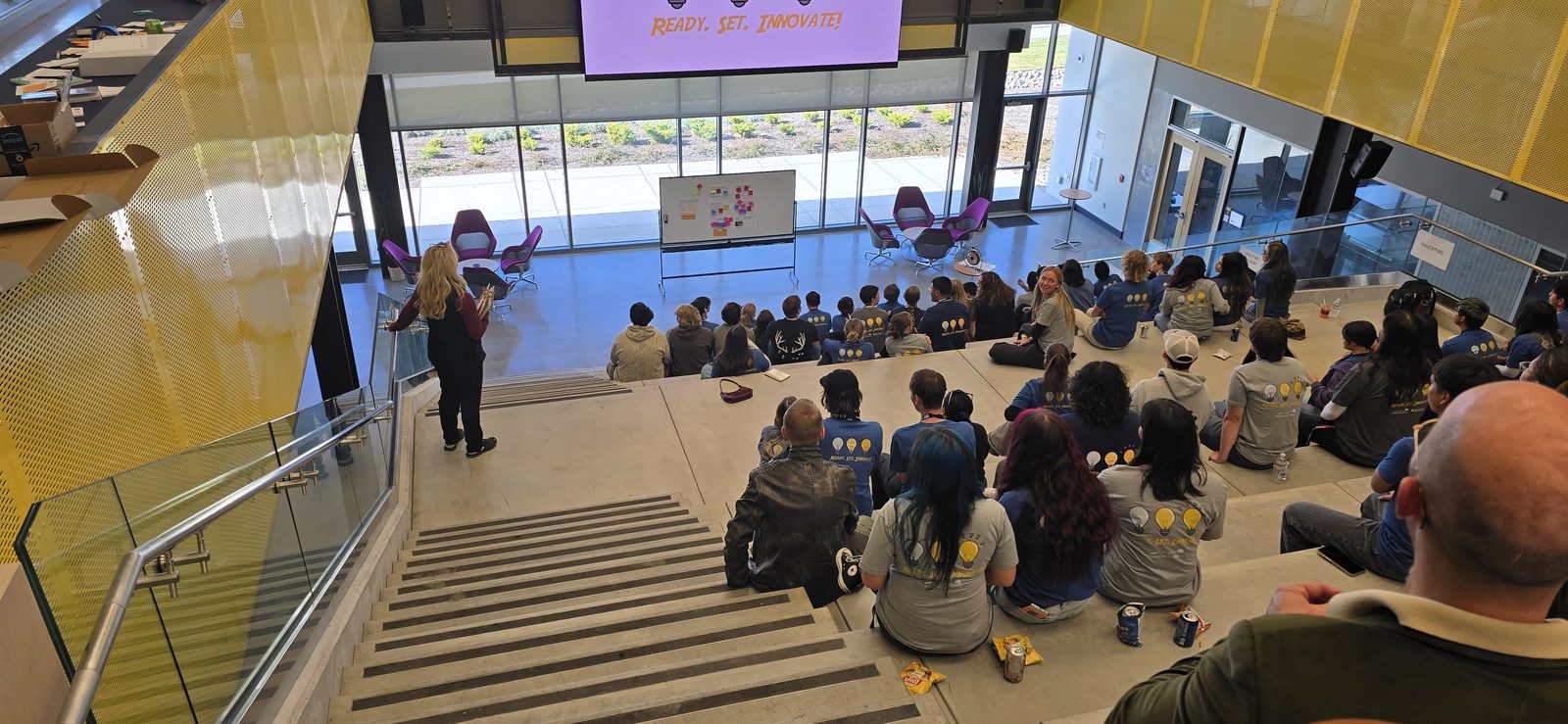
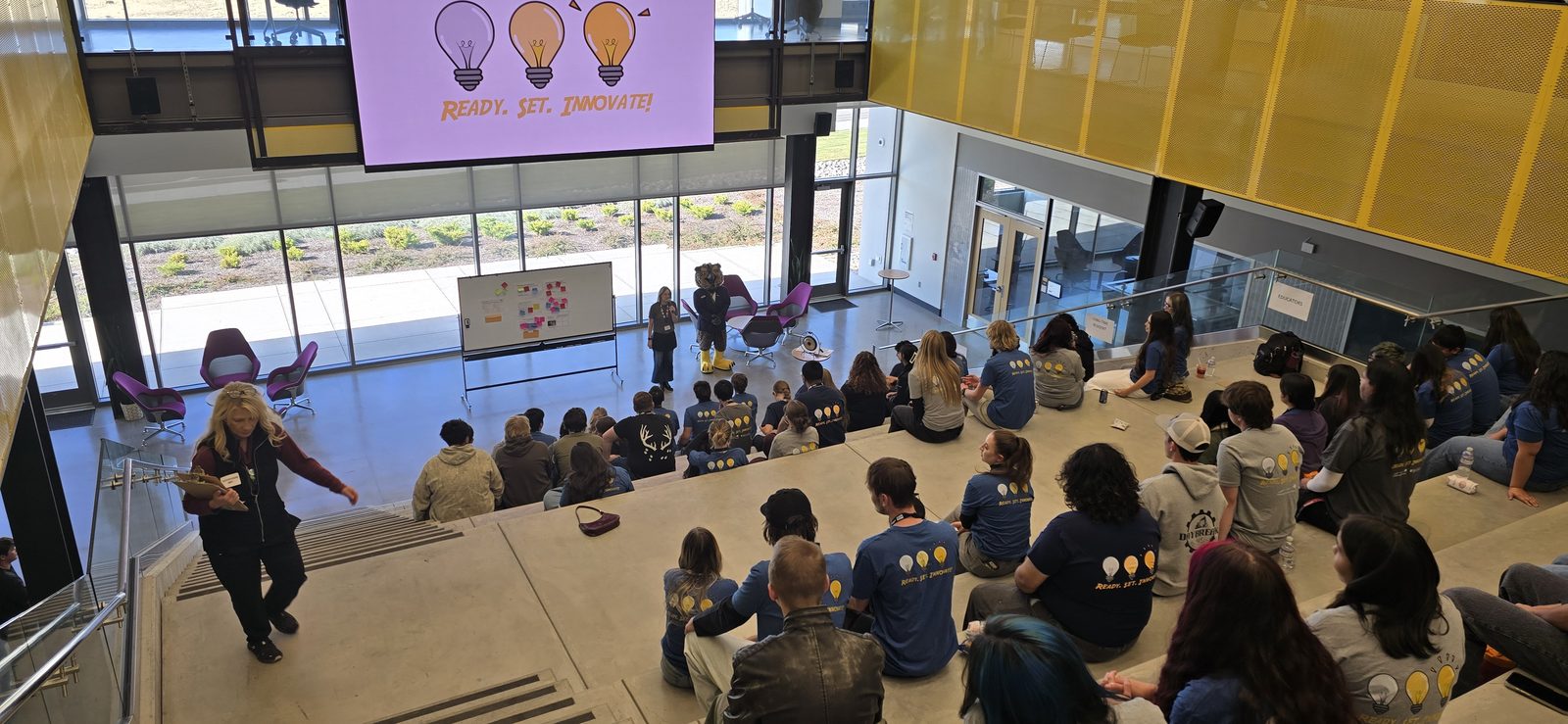
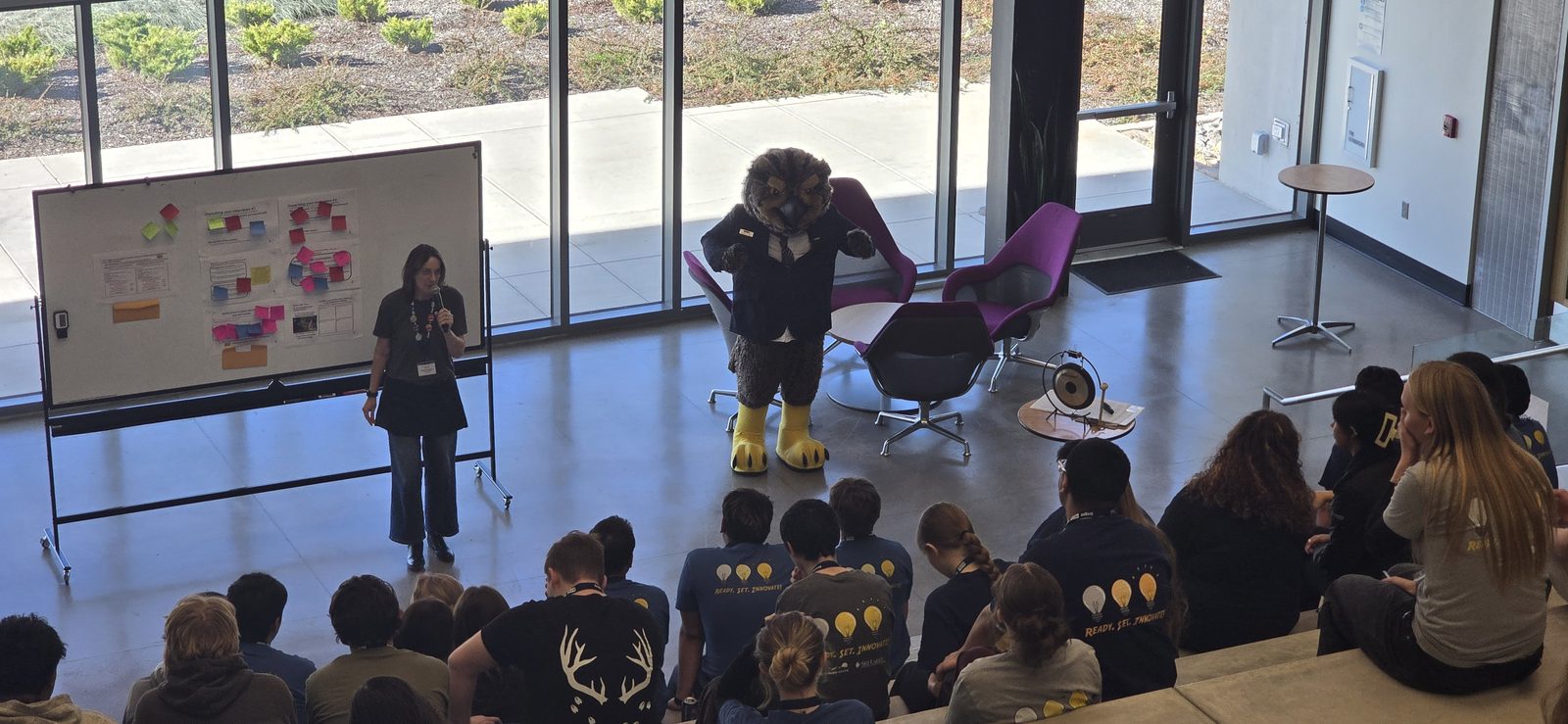
Mentors got there early for training, and by 9 a.m. the auditorium in the Center for Excellence in Engineering and Technology was full. The kickoff walked everyone through the process: empathize, define, ideate, prototype, test and tell.
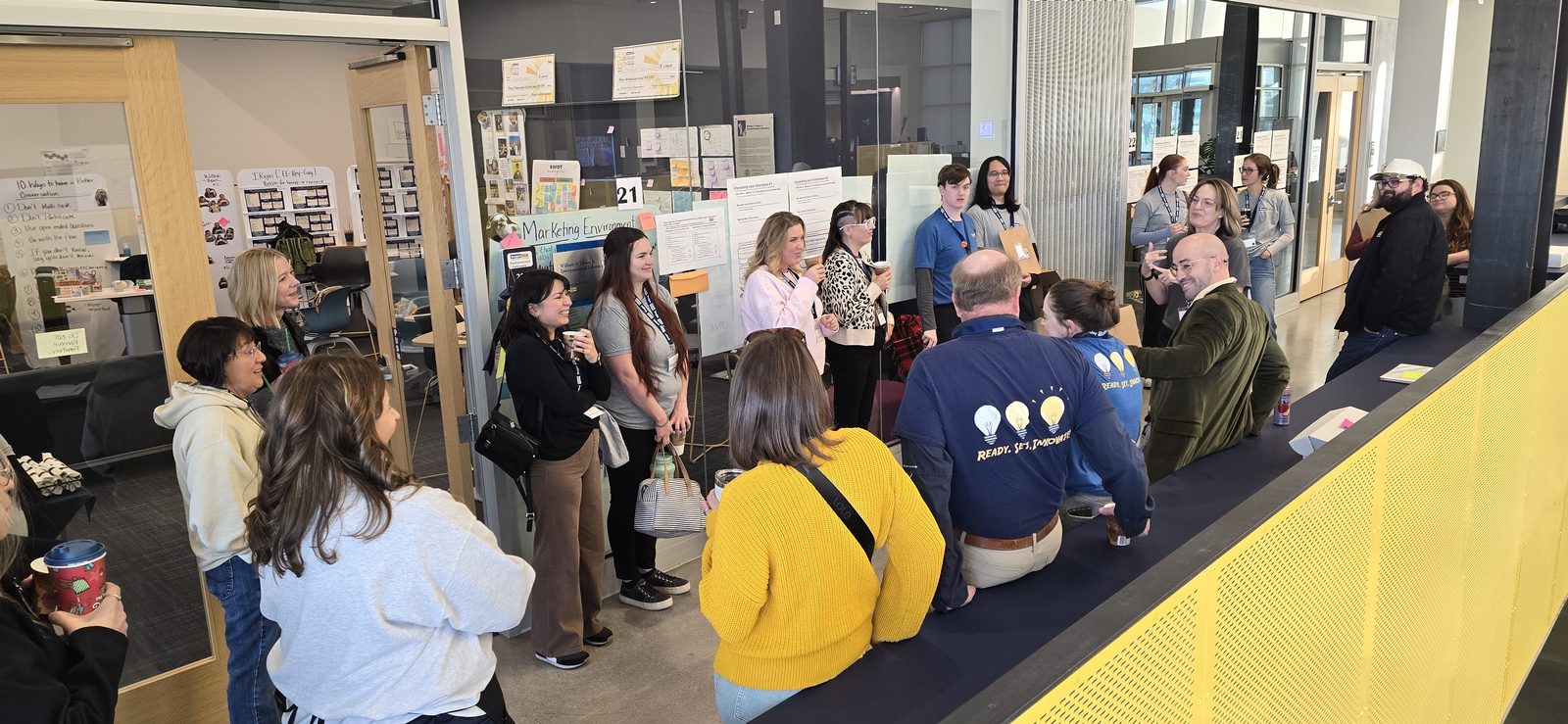
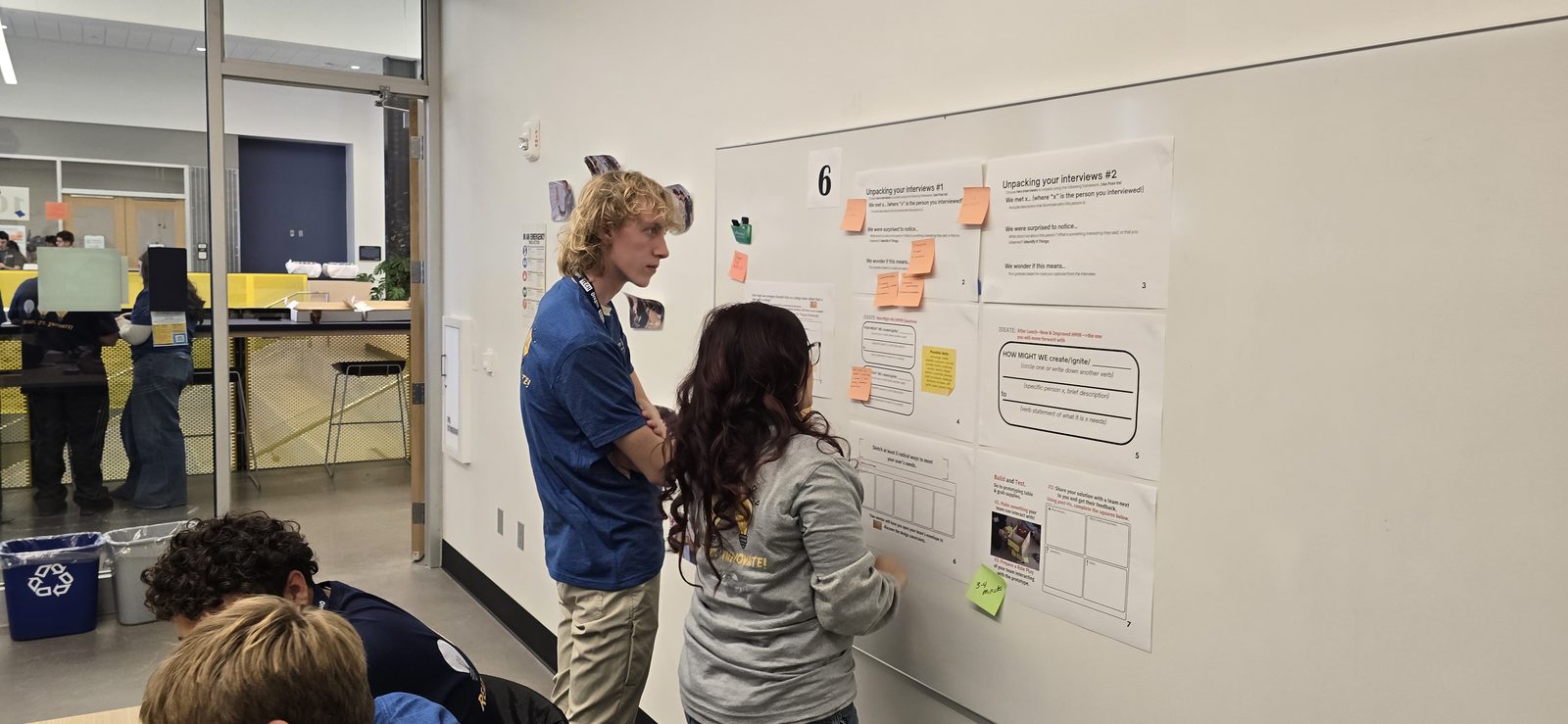
Then the students went to work. They started with empathy interviews, sitting down with community volunteers to ask real questions. What do you do on a Friday night here? How do you get around town? Do you plan to stay in Klamath Falls after you graduate? They unpacked what they heard, turned it into "How might we" questions, and brainstormed with sticky notes and a simple rule: "Yes, and." No idea gets shot down. You build on it.
By the afternoon, every team had sketched, built and tested a prototype, then pitched it to a room of community "clients." It is a lot to fit into one day, and that is the point. The guide the organizers gave us says the goal is a bias toward action, and to keep teams from settling on the first answer that sounds right.
Coaching my team
My team was a group of high school students from Medford. The hardest part of mentoring is keeping your own ideas to yourself. My job was to ask questions, keep the clock in front of them and let them find their own way. Watching them go from introductions in the morning to standing up and pitching a real solution to adults they had just met was the best part of my day.
Ideas worth building
Several of the top ideas went straight at how students actually live in Klamath Falls. One of the standouts was a new transportation app that would give students more ways to get around town. One of the interview questions was simply, "How do you usually get around town?" If you are a college student without a car, or a high school student who wants to get to an event on campus, getting around is a real barrier. The students heard that, named it, and designed something to fix it.
That is what design thinking does. It starts with people, not with the answer.
A community effort
Events like this only happen because a lot of people give up a full workday. I was proud to be in the room with the mentors and volunteers Hallie and Kristy thanked after the event, including Quincy Beyrouty, Sonja Bickford, Ryan Cherrick, Randy Cox, Taylor Hampton-Tinkham, Larry Holzgang, Katie Huck, Hannah Levine, Abbie McClung, Marcio Nunes, Brooke Riche, Thomas Stevens, Marta Tarantsey and Lynn Thomson.
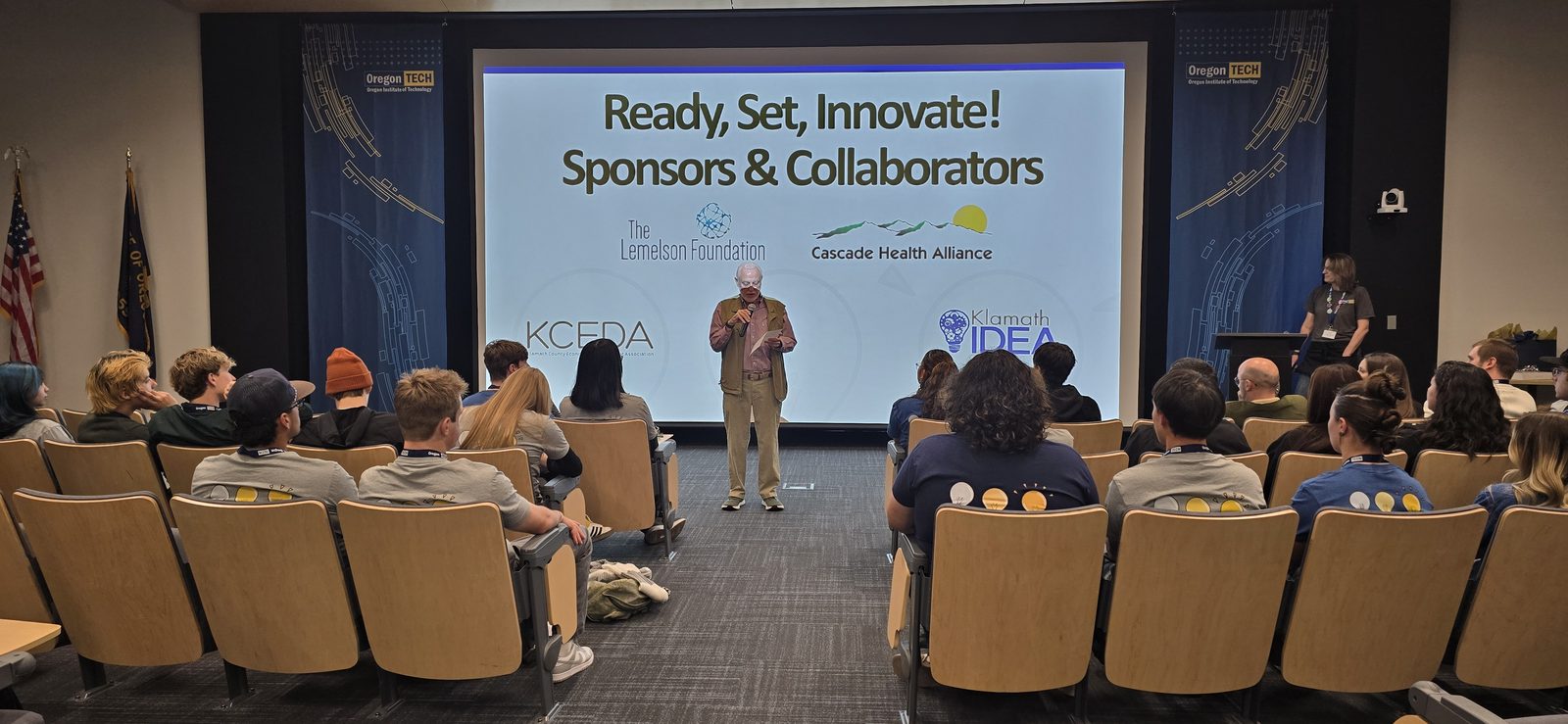
This year's sponsors and collaborators were Oregon Tech, the Innovation Hub of Klamath and Lake Counties, Darrel and Diana Samuels, The Lemelson Foundation, Cascade Health Alliance, the Klamath County Economic Development Association (KCEDA) and Klamath IDEA. And a big thank you to Jersey Mike's Subs in Klamath Falls for lunch, with dairy-free, gluten-free and vegetarian options so every student got fed.
Why it matters for the Klamath Basin
We talk a lot about keeping young people here, about growing local business, and about what Klamath Falls could become. On November 6, I watched 140 students do more than talk about it. They listened to their neighbors, found real problems and built real ideas in a single day.
Some of those students will be the ones who start the next business on Main Street, or build the app we all end up using. Some of them will choose to stay in the Klamath Basin because a day like this showed them they have something to offer here.
One idea from the day has stuck with me. In his keynote, Marcio Nunes said Oregon Tech needs a better way to let the community know what is happening at Oregon Tech, and for Oregon Tech students to know what is happening in the community. Bridging that gap is exactly what Klamath Living has been working to do in our community since October 2022. Every month, in print and on KlamathLiving.com, we share the stories of the people, businesses and organizations that make the Klamath Basin home, and I would love to see Oregon Tech and the rest of our community on the same pages.
As a local innovator and business owner, it was an honor to work with the Oregon Tech team and my fellow community members to help inspire innovation in our community. Thank you to Hallie Neupert, Kristy Weidman and everyone at Oregon Tech for inviting me to be part of it. I am already looking forward to next year.
To learn more about Ready, Set, Innovate! or to volunteer as a mentor, contact Oregon Tech's Business Management Department at oit.edu.