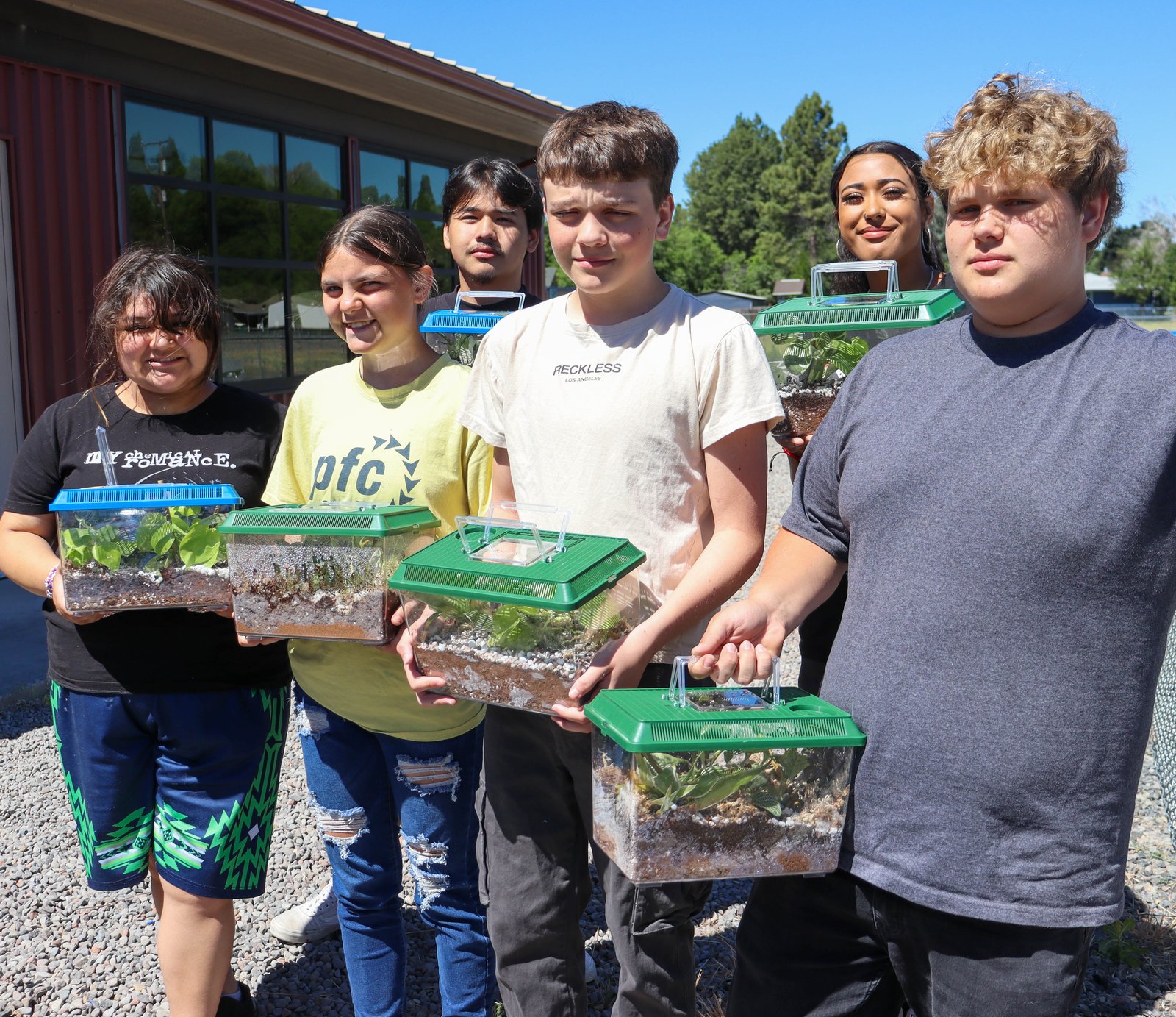
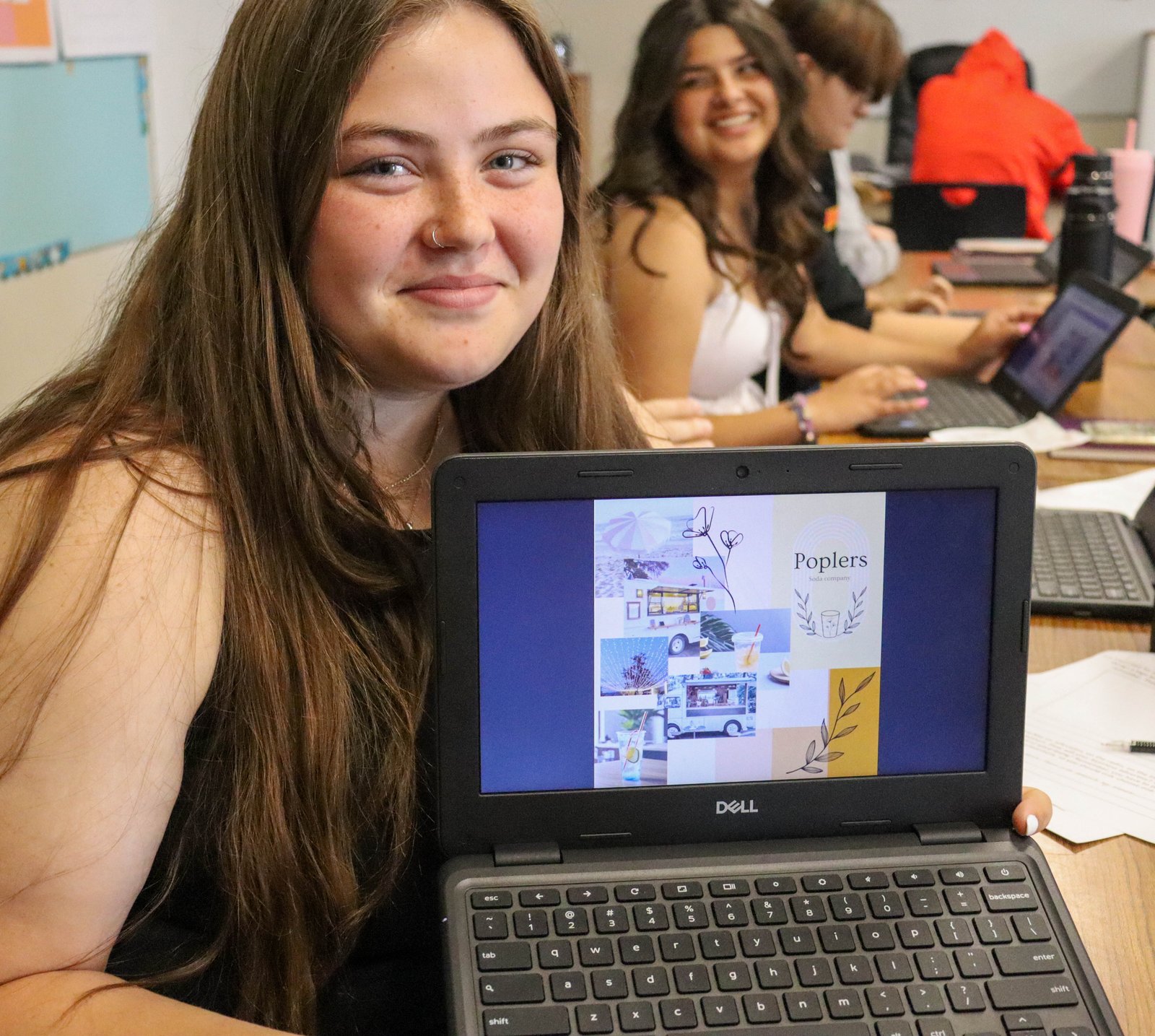
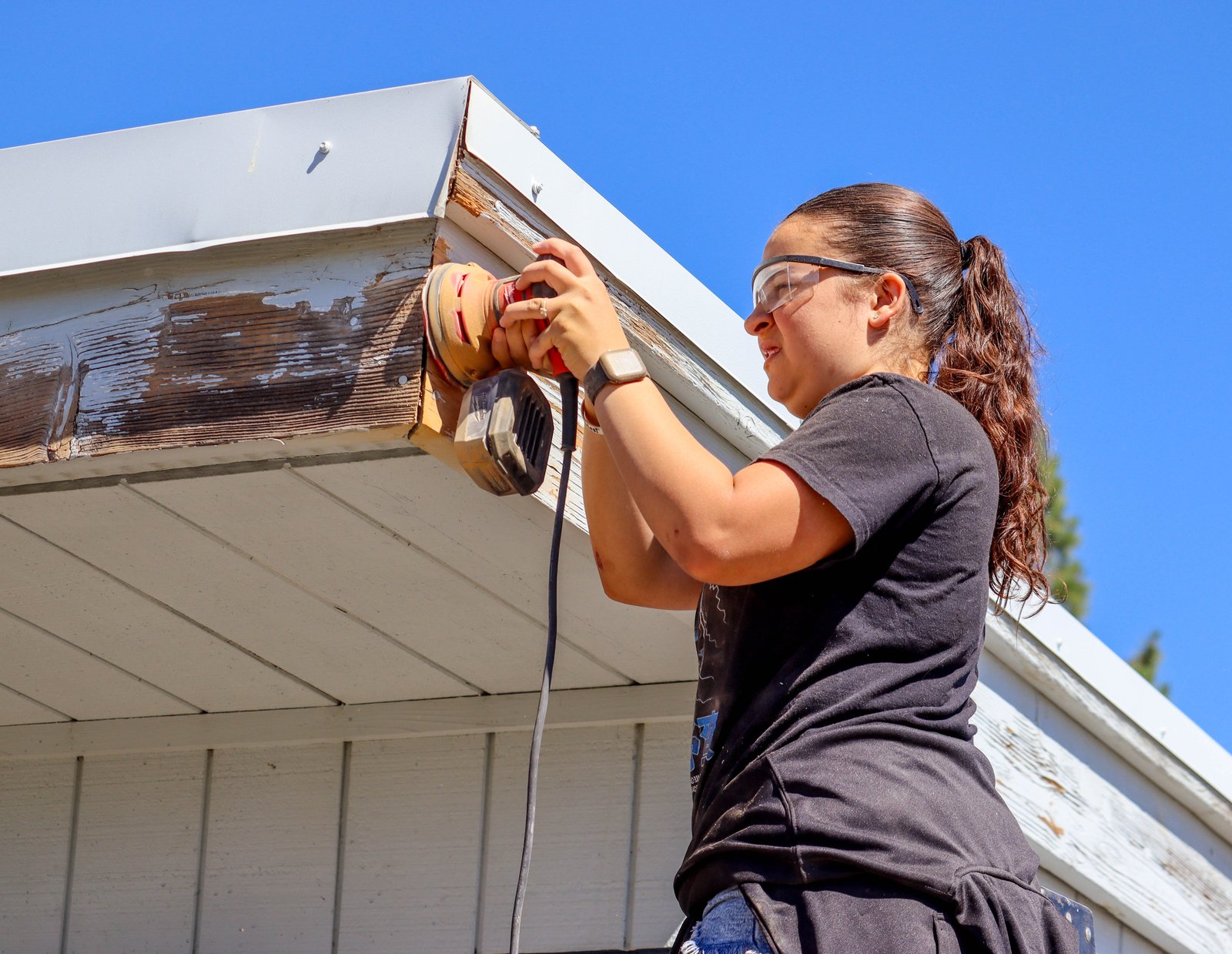
Photo 1: Mazama High student Cheyanne McFarland is taking a health science and nutrition class this summer. In the class, students are coming up with plans for a food truck. Cheyanne is planning one that serves custom-made sodas. Photo 2: Mazama High plant science students pose with their recently completed terrariums. Photo 3: A student in Mazama’s manufacturing summer program preps the concession stand near the softball fields for new paint.
Mazama High School student Danny Barajas spent Tuesday and Wednesday prepping and painting the school’s softball dugouts. Last week, he and his classmates in the school’s summer enrichment manufacturing course learned how to assemble tables and cabinets, and next week welding and shed building is on the agenda. Danny, an honors student, is using the summer school opportunity to get ahead on the credits he needs to graduate. “It’s definitely worth it. I’m learning a lot of skills,” he said.
For the first time, several high schools in the Klamath County School District are offering for-credit enrichment programs funded through state summer school grants. The grants also cover summer school literacy programs for kindergarten through sixth-graders as well as migrant summer school. Academic recovery classes are being offered at Falcon Heights. Hundreds of students districtwide are participating in summer school programming. At Mazama, 12 certified teachers are offering six for-credit classes – automotive, manufacturing, fine arts, local history, health sciences/nutrition, and plant science. Eighty students signed up for the four-week program, which includes hands-on projects and field trips.
Cheyanne McFarland, who will be a junior in the honors program this fall, is taking the health sciences/nutrition course to get a jump on credits. On Tuesday, the class was finalizing designs, menus, and business plans for their food trucks after visiting and researching similar businesses around town. Cheyanne’s food truck would be called Poplers and would serve custom soda drinks.
Classmate Parker Whiteley, a senior, decided he would open a food cart called Boasting Bao, offering traditional and fusion-style baos or Asian dumplings.
In plant sciences, students were finishing up terrariums and making plans to work in the school’s greenhouse. Their goal for the course: To design their dream garden, determining what plants to use as well as features, and to create a budget and plan. Coursework includes plant identification and care. Fine arts students on Tuesday were creating what teacher Krash Freeman called “narrative craft through drama.”
One group was creating by building worlds through a Dungeons and Dragons game with the goal of producing and publishing a Zine, a magazine with articles, stories, and art. Students also attended a writer’s workshop at Southern Oregon University in Ashland and attended a three-person musical production of “Lizard Boy.”
Mazama Vice Principal Sergio Cisneros and CTE coordinator Anna Monteil are heading up the summer program. Cisneros said he is pleased with the hands-on, project-based learning. “It’s full circle,” he said. “Students are learning valuable skills while also doing projects that allow them to take pride in their work and, in some cases, improve their school campus.”